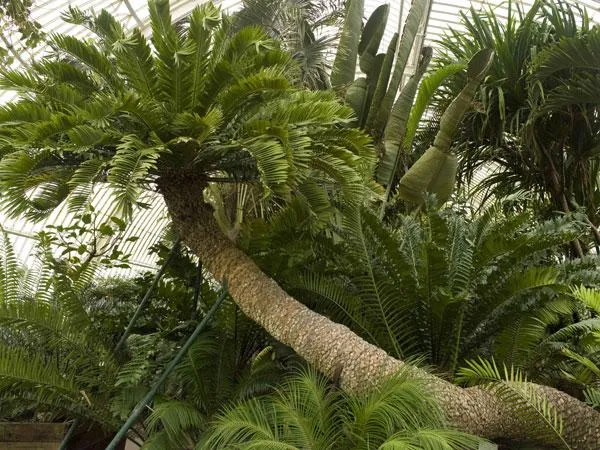
The potted Eastern Cape giant cycad that resides in the U.K.'s Royal Botanical Gardens, Kew, has lived through the French Revolution, the invention of the steam engine, both World Wars and man's first walk on the moon, which may have earned it the title of the oldest potted plant in the world.
The Eastern Cape giant cycad (Encephalartos altensteinii) is unique to South Africa. It is a medium-to-large plant with stems that extend up to 16 feet (5 meters) long and are usually 14 inches (35 centimeters) in diameter.
These plants can survive long enough to live to 2,500 years of age. Today, they are rare in the wild and are protected by law .
Kew's plant, which was initially planted at ground level, measures about 14 feet (4.2 m) from the base of its stem to the growing point. This means that the cycad has grown around 1 inch (2.5 cm) every year since it was originally potted in the 18th century.
The cycad was most recently repotted in 2009.
(Image credit: RBG Kew)
Kew's first plant collector, Francis Masson, brought the giant cycad back from the Eastern Cape region of South Africa in 1775. It was one of the first plants to be moved to the Palm House when it opened in 1848.
In 1819, the plant produced its first, and last, cone. Regardless, the plant has survived a lot, including some 30 high explosives that fell on Kew during World War II.
In 2009, the year of the Gardens' 250th anniversary, Kew repotted the plant in a specially built box. The transfer took three months of planning as the plant weighs more than a ton.
Sign up for the Live Science daily newsletter now
Get the world’s most fascinating discoveries delivered straight to your inbox.
For the science geek in everyone, Live Science offers a fascinating window into the natural and technological world, delivering comprehensive and compelling news and analysis on everything from dinosaur discoveries, archaeological finds and amazing animals to health, innovation and wearable technology. We aim to empower and inspire our readers with the tools needed to understand the world and appreciate its everyday awe.