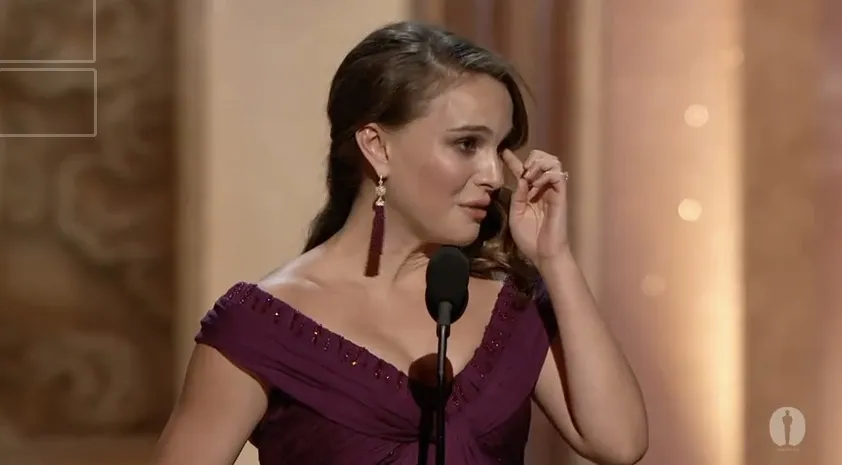
Count the tears from winning actresses and actors at this year's Academy Awards. Chances are, you'll see more than in years past.
That's because crying is up in Oscar acceptance speeches, according to a new analysis of more than 50 years of Academy Award clips. In fact, 71 percent of Oscar tears have been shed since 1995.
"Maybe the public has come to expect an emotional speech," study researcher Rebecca Rolfe, a master's student in digital media at Georgia Tech University, said in a statement.
Rolfe watched 207 speeches from winning lead actors and actresses, supporting actors and actresses and directors dating from 1953 to 2012. She found some surprises — the cofounder of Miramax has been thanked 12 times in Oscar history, compared with only 11 thank-yous to God — as well as some trends that aren't likely to shock. For example, acceptance speeches have stretched from 40 seconds on average in the 1960s to almost two minutes today. [Glitzy Oscar Facts (Infographic)]
Rolfe's larger research project is about gratitude, and she found that 79 percent of speeches closed with some variation of "thank you." The most common pattern is to broadly thank the Academy, which bestows the awards, and other nominees first and then to become more personal.
"After reflecting on the win's significance, they typically thank their peers, colleagues and sometimes even their lawyer before mentioning family," Rolfe said.
Sign up for the Live Science daily newsletter now
Get the world’s most fascinating discoveries delivered straight to your inbox.
Though "I'd like to thank the Academy" is a stereotypical speech start-off, only 40 percent of winners have uttered those words.
Turning on the tears
Actresses cry about twice as often as actors, with 12 of the last 15 best actresses turning on the waterworks, Rolfe found. It's not clear why tears are becoming more common, but Rolfe speculates social pressure on celebrities might contribute.
"Much like the movies, acceptance speeches are a type of performance," she said. "I believe the tears are real, but perhaps, maybe even subconsciously, actresses know what is expected of them when they accept the honor."
The only director ever to cry during a speech was Steven Spielberg, accepting an Oscar for "Schindler's List" in 1993.
Rolfe has created an interactive website where you can write your own speech and compare it with Oscar winners past. The ultimate goal, she said, is to understand public gratitude.
"In a way, we see a part of ourselves on stage at the Oscars," Rolfe said. "While judging speeches each year, we shape the trends and customs society expects and accepts."
Stephanie Pappas is a contributing writer for Live Science, covering topics ranging from geoscience to archaeology to the human brain and behavior. She was previously a senior writer for Live Science but is now a freelancer based in Denver, Colorado, and regularly contributes to Scientific American and The Monitor, the monthly magazine of the American Psychological Association. Stephanie received a bachelor's degree in psychology from the University of South Carolina and a graduate certificate in science communication from the University of California, Santa Cruz.