













Saber-Toothed Cat Remains Found Near Las Vegas

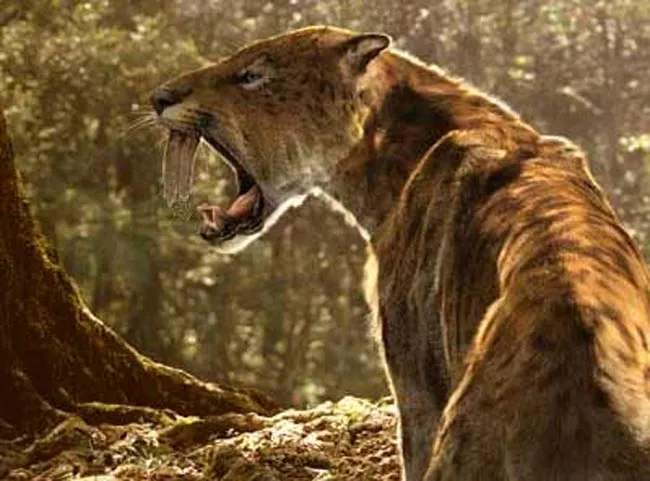
For over a decade, paleontologists gambled on finding fossils in the hills north of Las Vegas, Nev. Now they're reporting that their work has yielded a big payoff — the bones of a saber-toothed cat.
"I hate to say we hit the jackpot, this being Vegas — but we did!" Eric Scott, curator of paleontology at the San Bernardino County Museum in California, told the Highland News. "Meat-eaters are generally uncommon in the fossil record. This makes fossil remains of extinct carnivores very rare and special — and very tough to find."
Saber-toothed cats (aptly named Smilodon fatalis) were lion-size ambush predators, best known for their long canine teeth; the cats went extinct at the end of the Pleistocene Epoch some 11,000 years ago. The fossils discovered by the San Bernardino County Museum team are estimated to be more than 15,000 years old.
Recent studies have suggested the carnivores may have feasted on early humans, as well as other prey. It's also possible their extinction was caused in part by climate change.
While paleontologists working in the southern Nevada area had found the teeth and bones of mammoths, camels, horses and bison, remains of the saber-toothed cats remained elusive, which makes this finding important.
"We’re ecstatic," Kathleen Springer, senior curator for the San Bernardino County Museum, told the Highland News. "We've been saying for years that these critters were out here, somewhere. It was just a matter of time until we found one."
Follow LiveScience on Twitter @livescience. We're also on Facebook & Google+.
Get the world’s most fascinating discoveries delivered straight to your inbox.
