Mayan Apocalypse Countdown: 1 Month 'Til Doom

Are you ready for the end? Or perhaps a new beginning?
Either way, buckle up, because today marks the one-month countdown until the 2012 Mayan Apocalypse, set for Dec. 21. That date corresponds to the end of the 13th b'ak'tun, or 144,000-day cycle, on the Maya Long Count calendar, marking a full cycle of creation, according to the ancient Maya.
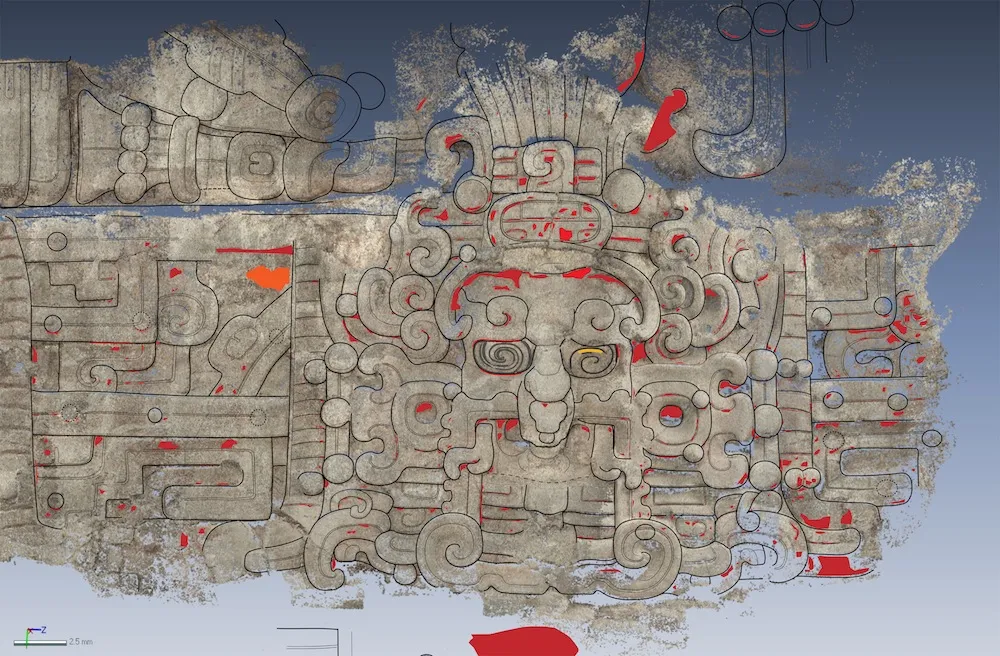
Article continues belowAll of this excitement stems from two ancient texts found in Central America and dating back to the heydays of the Mayan Empire. One calendar inscription was found on a monument made around A.D. 669 in Tortuguero, Mexico, and refers to the coming of a god associated with cycle changes on the Dec. 21 date. (Of course, since December is an invention of western calendars, they didn't use quite those terms.) [Doom & Gloom: Top 10 Post-Apocalyptic Worlds]

A second inscription, unearthed this year in Guatemala, refers to a struggling king who called himself the "13 k'atun lord," an effort to tie himself to the 13th b'ak'tun of Dec. 21, 2012. This was likely a public relations move designed to shore up support after the king suffered a crippling defeat in battle a few years before.
In neither text were apocalyptic predictions made. But when westerners caught wind of the Mayan calendar, they mixed in their own end-of-the-world mythology, much of it stemming from Christianity, and created a new legend, according to University of Kansas Maya scholar John Hoopes.
Apocalypse predictions are a fairly frequent occurrence in western civilization. Most recently, radio preacher Harold Camping gained notoriety after predicting Judgment Day on May 21, 2011 and the end of the world on Oct. 21 of that year. Camping had initially claimed the world would end in 1994, later asserting he had gotten his Biblical math wrong; the real date, he said, would be Oct. 21, 2011.
The real Mayan Empire did actually end, of course, albeit slowly and not on anyone's predicted timetable. Environmental evidence suggests that drought helped crumble advanced Mayan cities and may have kept them from rebuilding once their political institutions collapsed.
Follow Stephanie Pappas on Twitter @sipappasor LiveScience @livescience. We're also on Facebook& Google+.
