













Hawks Locked Up As Galapagos Rats Poisoned

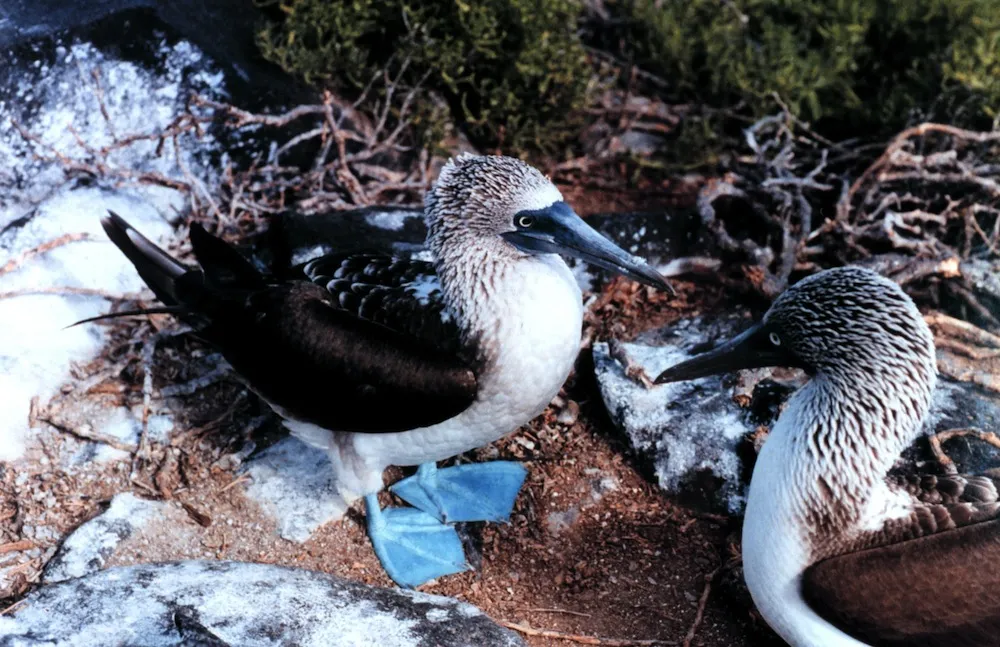
Wildlife officials at Galapagos National Park have rounded up 30 hawks on Pinzón Island for safekeeping while the island is carpeted with poisonous bait pellets designed to eradicate invasive rats.
The temporary captivity will keep the hawks from eating any poison-contaminated rodents during the eradication project, which began in the park in 2011. Black rats, Norway rats and house mice snuck onto the islands after hitching rides on pirate and whaling ships in the 1600 and 1700s. Since then, they've threatened the islands' bird and reptile species by scavenging their eggs — a major problem given that many Galapagos species are found nowhere else in the world.
The invasive rats have also edged out native rodent species, driving the endemic Galapagos rice rat (Aegialomys galapagoensis) to extinction on Santa Cruz Island. As of 2010, black rats roamed over 90 percent of Galapagos land area, spread among at least 35 islands and islets. [Photos: The Peskiest Alien Mammals]
Starting in the early 1980s, scientists and wildlife officials have attempted to control the rats and have successfully eradicated them from some islets. Last year, officials successfully eradicated rats on Rabida Island and a number of smaller landmasses.
In the latest phase of the project, wildlife officials are dropping about 40 tons of poisoned bait via helicopter onto Pinzón Island and Plaza Sur, a small islet. Neither island has human residents, but officials are taking steps to protect the native Galapagos hawk (Buteo galapagoensis), which hunts small rodents.
The 30 Galapagos hawks that live on Pinzón Island were captured last week and will be kept in captivity for two months, by which time the poisons will no longer be a threat. A similar technique was used on Rabida Island and other areas last year.
The Galapagos aren't the only islands to have problems with rat invaders. One Aleutian island actually earned the named "Rat Island" after a Japanese ship ran aground in the 1700s and flooded the place with invasive rodents. In 2008, a similar rat-bait project eliminated rats on the island.
Get the world’s most fascinating discoveries delivered straight to your inbox.
Follow Stephanie Pappas on Twitter @sipappas or LiveScience @livescience. We're also on Facebook & Google+.

Stephanie Pappas is a contributing writer for Live Science, covering topics ranging from geoscience to archaeology to the human brain and behavior. She was previously a senior writer for Live Science but is now a freelancer based in Denver, Colorado, and regularly contributes to Scientific American and The Monitor, the monthly magazine of the American Psychological Association. Stephanie received a bachelor's degree in psychology from the University of South Carolina and a graduate certificate in science communication from the University of California, Santa Cruz.