















Image Gallery: Early Humans Wield Tools

Cave Discovery

Rocks carved into ancient stone arrowheads or lethal tools for hurling spears found in Pinnacle Point cave (shown here) in South Africa suggest that humans innovated relatively advanced weapons much earlier than previously thought, researchers say. The findings are detailed in the Nov. 7, 2012, issue of the journal Nature.
Thin Blades

The scientists uncovered thin blades of stone called microliths, each only about 1.2 inches (3 centimeters) long at most. These were blunted along one edge so they could be glued onto slots carved in wood or bone.
Heating Microliths
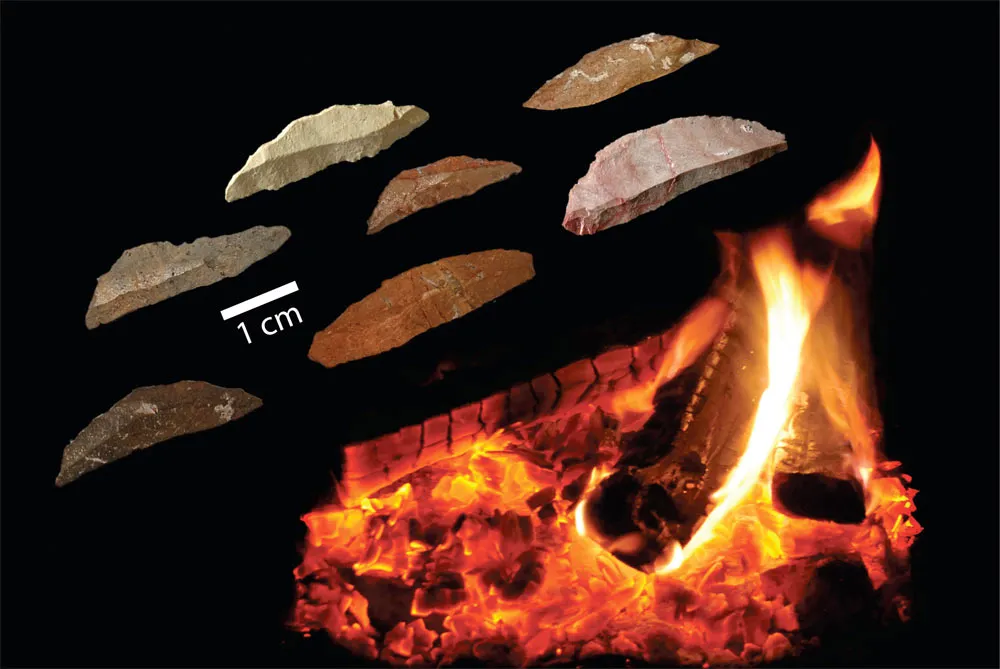
The stone used to produce these blades, known as silcrete — quartz grains cemented by silica — was carefully treated with heat to make it easier to shape.
Blade Technique

These microliths could have found use as the earliest known arrowheads. However, researchers suggest they were more likely incorporated in spear-hurling devices known as atlatls. Here, a reproduction of microlith-backed blade technique.
Fortuitous Find

These artifacts were discovered over the course of nine years at Pinnacle Point. Initially, the researchers found artifacts and fossil bones on the beach there; then one day, storm exposed deposits of these materials from a cave higher up. So far the researchers have found about sediments about 45 feet (14 meters) deep containing artifacts and fossils dating from approximately 50,000 to 90,000 years ago.
Pinnacle Point

Here, the excavation team at Pinnacle Point cave site. Their disoveries suggest ancient peoples may have been capable of complex forms of thinking, scientists added.
Get the world’s most fascinating discoveries delivered straight to your inbox.
