













Phelps, Lochte & Split-Second Races: How Olympic Timing Tech Works

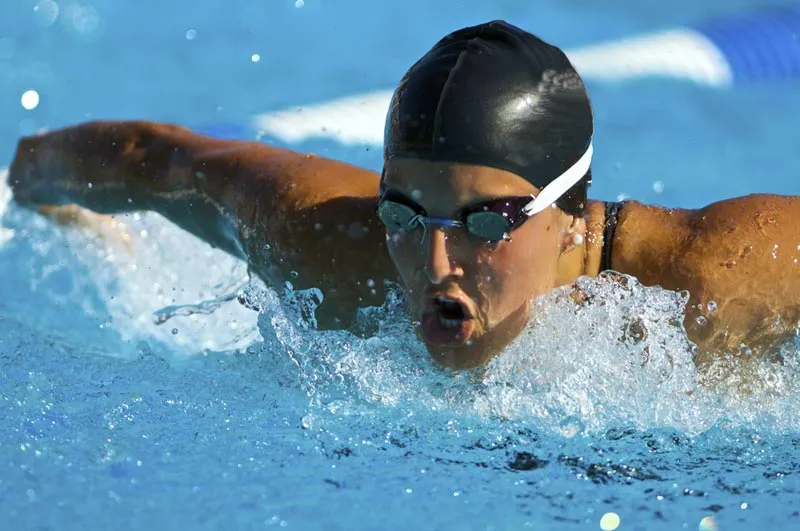
On Wednesday, U.S. Olympic swimmers Michael Phelps and Ryan Lochte will dive into the preliminary heats of the men's 200-meter individual medley for a much-anticipated showdown between rivals. Less than one-tenth of a second separated these swimmers the last time they competed in this event: Phelps achieved a time of 1:54.84 at the Olympic Trials in June, with Lochte close on his heels at 1:54.93.
In 2008, Phelps secured a gold medal in the men's 100-meter butterfly with an amazing last-second push that got him to the pool wall exactly 0.01 seconds before Serbia's Milorad Cavic.
With champions separated by less time than it takes to blink an eye, how do Olympic judges pick the winner? The answer is in technology: High-speed cameras, lasers and sensors all work together to mark the most accurate and precise times possible for the athletes. [Video: Clocking Olympic Champions]
"It's incredibly important, because the level of accuracy that is required is in the hundredths to thousandths of seconds," Georgia Tech electrical engineer Linda Milor said in an interview with the National Science Foundation. "Those levels of measurement require a very, very high level of precision and a very, very high level of accuracy."
The Olympic clocks are 100 times more accurate than a regular stopwatch, Milor said. Accuracy is a measure of how true to the "real" time the clock can record. Precision is the ability to get the same measurement over and over and over again.
In London, incredibly sensitive sensors are measuring the precise start and stop times for athletes, from the starting blocks used by track sprinters to the bar code-like radio frequency identification (RFID) tags worn by the marathoners and bikers. These tags transmit data about a racer's location to antennae located along the course.
In the pool, swimmers stop their own timers when their outstretched hands tap against the wall, which is embedded with sensors that convert the pressure of their touch to an electrical impulse.
Get the world’s most fascinating discoveries delivered straight to your inbox.
"Essentially, it's a mechanical problem that has to convert to an electrical problem, which is challenging," Milor said.
Follow Stephanie Pappas on Twitter @sipappasor LiveScience @livescience. We're also on Facebook& Google+.

Stephanie Pappas is a contributing writer for Live Science, covering topics ranging from geoscience to archaeology to the human brain and behavior. She was previously a senior writer for Live Science but is now a freelancer based in Denver, Colorado, and regularly contributes to Scientific American and The Monitor, the monthly magazine of the American Psychological Association. Stephanie received a bachelor's degree in psychology from the University of South Carolina and a graduate certificate in science communication from the University of California, Santa Cruz.