













Massage May Enhance Exercise Benefits, Study Finds

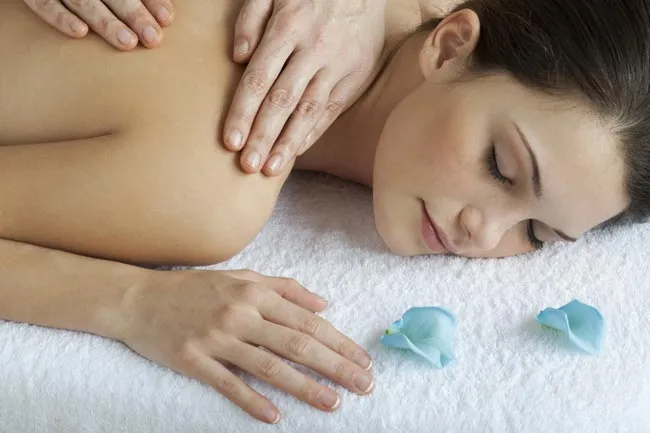
While some may enjoy a massage to soothe pain after an intense workout, new research gives some evidence that the effects of a massage go beyond providing a good feeling.
People who worked out for 70 minutes and then had a massage showed a marked increase in their muscle cells' energy production, and a decrease in inflammation in the cells, a small study from Canada found.
For many years, people have gotten massages "without a huge amount of scientific underpinning," said study researcher Dr. Mark Tarnopolsky, head of the division of neuromuscular and neurometabolic disease at McMaster University in Hamilton, Ontario.
"Our work raises the very interesting possibility that endurance exercise may be enhanced, or at least the benefits may be enhanced, for those who have a massage following their exercise," Tarnopolsky said.
The study is published today (Feb. 1) in the journal Science Translational Medicine.
Massaging the muscles
In the study, 11 young men exercised to exhaustion, which took about 70 minutes, and then after a brief rest, had one leg massaged while the other was not.
Get the world’s most fascinating discoveries delivered straight to your inbox.
Researchers analyzed tissue samples taken from the men's leg muscles shortly after the massage, and again after two and a half hours of rest, and compared them with samples they had taken from the participants after a previous, briefer workout.
They found two significant changes in the massaged muscles: a reduction in inflammation, and an increase in the production of mitochondria, which serve as an energy source in the body's cells.
"The mitochondria are the powerhouse of the cell, and increases of mitochondria are at the heart of the benefits of endurance exercise," Tarnopolsky said.
At the same time, the researchers did not find any evidence of one often-touted benefit of massage. The massage had no effect on reducing lactic acid, which builds up in muscles during exercise.
"I think that this contributes to the growing body of thoughtful scientific work suggesting that massage itself, one, does have clear benefits and, two, there are ways that we can begin to discern the biology of why massage has those benefits," said Dr. Mark Hyman Rapaport, chair of the Department of Psychiatry and Behavioral Sciences at Emory University School of Medicine.
"It's remarkable to me they're getting such profound effects with only 10 minutes of massage intervention," said Rapaport, who has studied the effects of massage for the National Center for Complementary and Alternative Medicine.
Massages that heal?
Rapaport said future research should give a better idea of where massage may be a "biologically active" treatment, and could help with healing and athletic training.
The new study suggests "that by getting a massage, the athletes are getting something that is decreasing inflammation and promoting a more positive feeling," he said.
One future research direction will be to examine the long-term effect of massage after a workout.
While the short-term effects seem positive, Tarnopolsky said, that there are some reasons to think there may be adverse effects from massage down the line. In part, that's because the role of the body's natural inflammation process in healing is not fully understood.
"If we suppress inflammation, could we slow down the healing process?" Tarnopolsky said, explaining that some recent research has raised these concerns. "Although [massages] make you feel better, by reducing inflammation, is that actually reducing the body's ability to repair?"
Future research, he said, should answer those questions.
"That's really the next step," Tarnopolsky said.
"If we're slowing down inflammation, might a person be able to recover faster from a marathon or very heavy training session? Would it allow a top-sport athlete to put in a higher volume of training to get ready for a competition?" he said.
Pass it on: New research shows massage has biological effects on the body, and it may have a long-term impact after exercise.
This story was provided by MyHealthNewsDaily, a sister site to LiveScience. Follow MyHealthNewsDaily on Twitter @MyHealth_MHND. Find us on Facebook.
