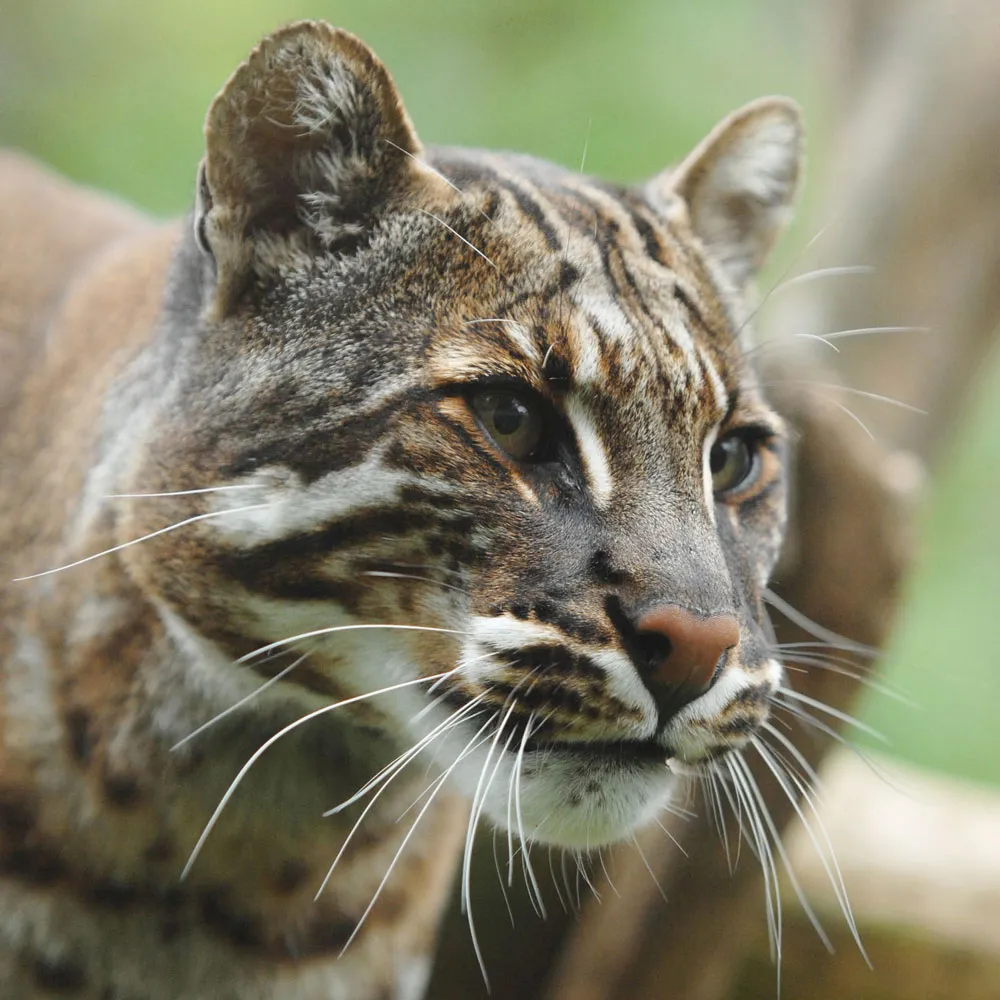
A breakthrough pretzel-shaped surgical instrument was used by a leading veterinary surgeon to carry out a liver and kidney biopsy on a sick Asian golden cat at the United Kingdom's Edinburgh Zoo. The successful surgery was the first time that the instrument was used on an animal.
The instrument, fittingly called PretzelFlex, has an innovative shape that allows for minimally invasive surgery, also known as keyhole surgery.
The PretzelFlex device "can be passed down a very thin keyhole cannula and then formed into a large, sturdy, pretzel-like shape, and used, just like a hand, to hold organs out of the way during a keyhole operation," Romain Pizzi, a veterinary surgeon for the Royal Zoological Society of Scotland, which is based at Edinburgh Zoo, said in a statement.
Pizzi used the twisty tool to conduct a liver and kidney biopsy and assess whether the cat, named Ipoh, has polycystic disease. Zoo personnel noticed that Ipoh had lost weight, was quieter and had a dull, poorly groomed coat, leading them believe that he was sick. Ultrasound tests revealed small cysts in some of the cat's organs, but the staff still needed to determine what they were and how to treat them.
The "pretzel" instrument can pass through small incisions and then transition into a large, sturdy shape that can be used to hold organs out of the way during a keyhole operation.
(Image credit: Surgical Innovations)
The tool was donated by medical device designer Surgical Innovations and delivered to the zoo just hours before the surgery.
Pizzi reported that, shortly after surgery, Ipoh was behaving normally and enjoyed his evening meal. Such a recovery would not have been possible if the procedure had been carried out using open abdominal surgery rather than the keyhole technique.
"I am pleased to say the whole procedure was a great success, and we hope to get Ipoh back to full health soon," Pizzi said.
Sign up for the Live Science daily newsletter now
Get the world’s most fascinating discoveries delivered straight to your inbox.
As well as a faster recovery period, other benefits of minimally invasive surgery include a reduction in postoperative pain and a decrease in postoperative care. Compared with open abdominal surgery, keyhole surgery also results in a decreased risk of wound complications or infection after surgery.
Although keyhole procedures are routinely used in human surgery, the standard procedure in animals is still open abdominal surgery. Currently, the Royal Zoological Society of Scotland is the only veterinary service specializing in zoo and wildlife keyhole surgery.
You can follow LiveScience writer Remy Melina on Twitter @remymelina. Follow LiveScience for the latest in science news and discoveries on Twitter @livescience and on Facebook.
Remy Melina was a staff writer for Live Science from 2010 to 2012. She holds a bachelor’s degree in Communication from Hofstra University where she graduated with honors.