














Japanese Perception of Risk Lowered by Tsunami

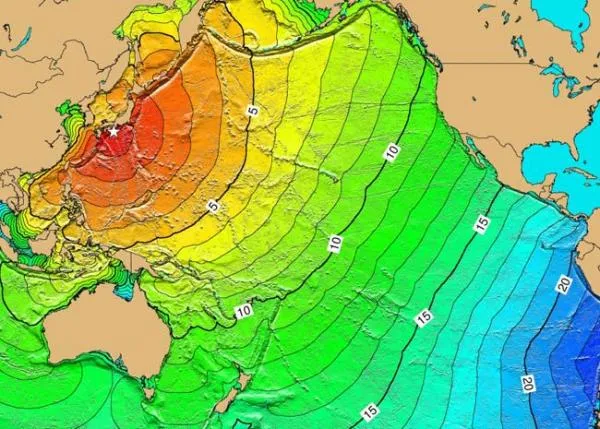
SAN FRANCISCO — The devastating tsunami that struck Japan after the massive Tohoku earthquake March 11 appears to have generated misperceptions about tsunami dangers among Japanese citizens.
Surveys conducted a year before the March tsunami and then afterward reveal a potentially deadly shift in perception among citizens in western Japan, Satoko Oki, an assistant professor at the Earthquake Research Institute, University of Tokyo, said here today (Dec. 5) at the annual meeting of the American Geophysical Union.
The tsunami that struck the coastof Japan March 11 hit roughly 30 minutes after the magnitude-9.0 Tohoku earthquake. The waves were reported to reach three stories high. The disaster is estimated to have killed approximately 20,000 people.
When participants in the online, representative survey were asked, 'What height of a tsunami would you consider dangerous?' in March 2010, 70.8 percent of respondents said that less-than-10 feet (3 meters) was dangerous.
This was the correct answer, according to Oki.
"A 2-meter-high [7-foot] tsunami can completely destroy your house," she said.
But in the later survey, conducted in April 2011, fewer — 45.7 percent — of survey respondents responded correctly.
Get the world’s most fascinating discoveries delivered straight to your inbox.
Likewise, when asked, 'At what estimated height of tsunami would you evacuate?' 60.9 percent said less-than-3 meters (10 feet). A year later, 38.3 percent agreed with this.
"So the damage lowered the risk assessment, it did not teach a lesson, but instead, it made the Japanese people more vulnerable than before," Oki said.
She then showed headlines reporting tsunami waves measuring from 49 feet (15 meters) to the near-record 124 feet (37.9 meters) hitting the coast of Japan.
After March 11, Japanese kept hearing those numbers over and over again, and they began to evaluate the danger associated with tsunamis against those numbers, she said. So, a smaller height began to seem less dangerous, even if it wasn't.
To prevent this from happening in the future, Oki recommended that information available to the public should make clear the risk associated with relatively small tsunamis, including it in reports describing tsunamis like the one in March.
Japanese officials are considering not including projected tsunami heights with future evacuation orders, she said.
This story was provided by OurAmazingPlanet, a sister site to LiveScience. You can follow LiveScience senior writer Wynne Parry on Twitter @Wynne_Parry. Follow LiveScience for the latest in science news and discoveries on Twitter @livescience and on Facebook.
