













Exotic Microbes Played Role in Early Earth's Atmosphere, Study Suggests

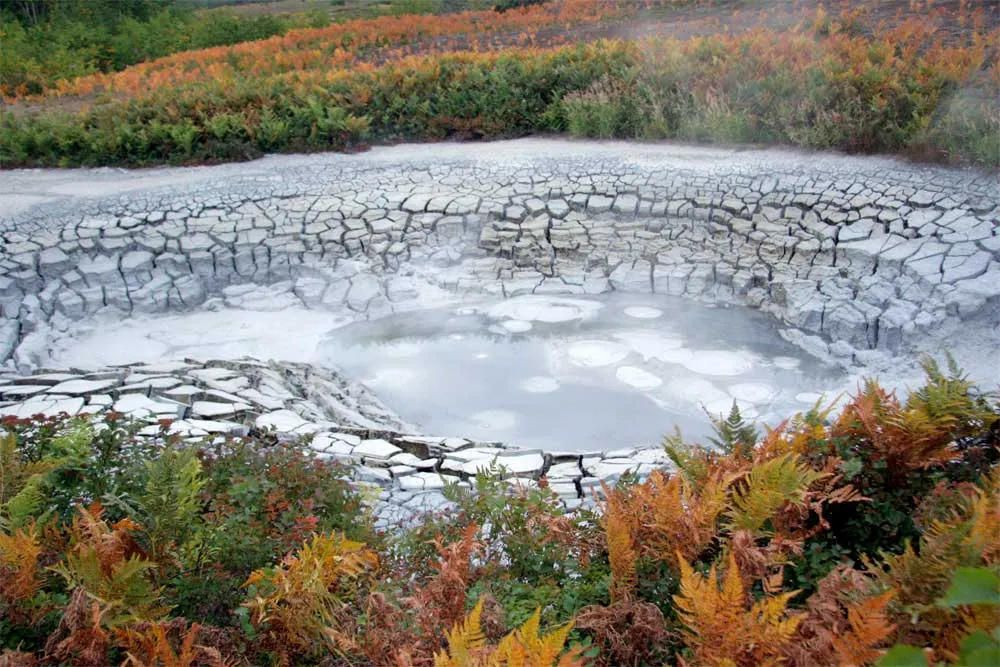
Extreme microbes that survive on gases burped out by hot springs in Siberia may have played a role in Earth's early atmosphere, new research is showing.
The carbon monoxide-munching microbes, called anaerobic carboxydotrophs, were found in the Uzon Caldera of eastern Siberia's Kamchatka Peninsula. The microbes also produce carbon monoxide, studies by University of Chicago geophysicist Albert Colman and his colleagues suggest.
"We targeted geothermal fields," Colman said, "believing that such environments would prove to be prime habitat for carboxydotrophs due to the venting of chemically reduced, or in other words, oxygen-free and methane-, hydrogen-, and carbon dioxide-rich volcanic gases in the springs."
The team found that much of the carbon monoxide at the Kamchatka hot springs wasn't bubbling up with the volcanic gases, but instead was being produced by these exotic microbes.
This processing of carbon monoxide has implications for the air's composition billions of years ago. Scientists think Earth's early atmosphere contained just sparse amounts of oxygen but relatively large amounts of carbon dioxide and possibly methane. Then during the so-called Great Oxidation Event about 2.5 billion to 2.3 billion years ago, oxygen levels in the atmosphere rose from vanishingly small amounts to modestly low concentrations.
"This important transition enabled a widespread diversification and proliferation of metabolic strategies and paved the way for a much later climb in oxygen to levels that were high enough to support animal life," Colman said.
If microbes at the time were not only feeding on but also churning out carbon monoxide, perhaps, the researchers suggest, levels of the gas were much higher than thought during the Archean period, an interval that preceded this dramatic increase in atmospheric oxygen. [Thick Haze Protected First Life on Earth]
Get the world’s most fascinating discoveries delivered straight to your inbox.
"Our work is showing that you can't consider microbial communities as a one-way sink for carbon monoxide," Colman said. His calculations suggest that carbon monoxide may have nearly reached concentrations of 1 percent in the atmosphere, tens of thousands of times higher than current levels. This in turn would have exerted influence on concentration of atmospheric methane, a powerful greenhouse gas, with consequences for global temperatures.
In addition, such high carbon monoxide concentrations would have been toxic for many microorganisms, placing evolutionary pressure on the early biosphere.
"A much larger fraction of the microbial community would've been exposed to higher carbon monoxide concentrations and would've had to develop strategies for coping with the high concentrations because of their toxicity," Colman said.
This line of research, with more new findings, has been submitted to a scientific journal for publication.
Follow LiveScience for the latest in science news and discoveries on Twitter @livescience and on Facebook.
