













For Men on a Date, Evolution May Guide Where Their Eyes Go

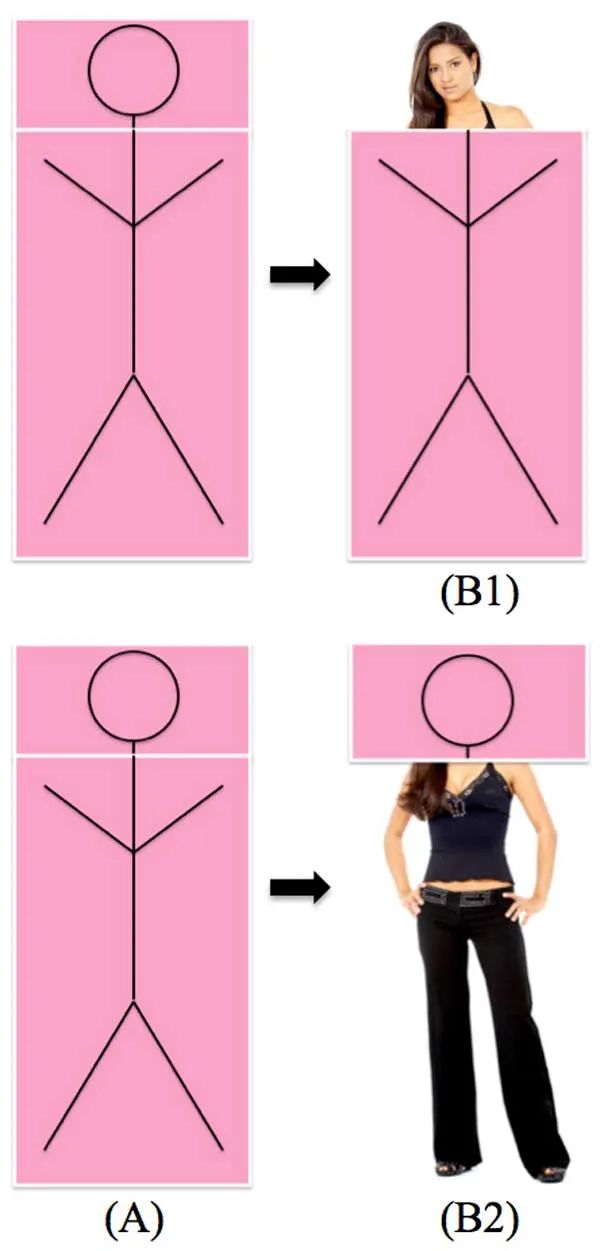
Whether a man is drawn to a woman's body or her face may depend on whether he sees her as a short-term fling or a long-term lover, according to a new study that discusses evolutionary motivations in dating.
Men who, for the purposes of the study, were considering just a fling with a woman were more likely to peek at a picture of her body than men who were thinking about a long-term relationship, the research found. The guys considering a long-term relationship showed a preference for looking at her face.
The findings may reflect men's evolutionary drives, said study co-author Jaime Confer, a psychology graduate student at the University of Texas in Austin. Men who want a fling, she said, may be subconsciously looking to a woman's waistline to judge the woman's current fertility. Men looking for long-term partners, on the other hand, may be more interested in her face for clues of reproductive potential in the future.
Body or face?
Previous studies have noted that a woman's face reflects her youth and health, which can affect her future reproductive abilities. Lots of wrinkles might suggest she has few childbearing years left, for example. The body, on the other hand, holds clues as to how fertile a woman is right now. Waist-to-hip ratio can signal whether a woman is already pregnant, and maybe even whether she is currently ovulating, according to previous research.
Confer and her colleagues asked 192 men and 183 women, all heterosexual and in college, to consider entering into either a short- or long-term heterosexual relationship. The students were given a masked picture of a potential date, with boxes covering both the head and clothed body. They could choose to remove either the box covering the head or the box covering the body, but not both.
On the whole, 61 percent of men and 69 percent of women chose to see the individual's face. But among the men who were thinking short-term, the interest in viewing the woman's face decreased. Of the men considering short-term relationships, 52 percent chose to see the body. If men had been picking more or less randomly, with no particular rhyme or reason, statistics predict, 39.5 percent would have looked at the woman's body.
Get the world’s most fascinating discoveries delivered straight to your inbox.
Similarly, if men had been choosing randomly, 55 percent of the men considering a long-term relationship were expected to look at the woman's face. In actuality, 68 did.
As for women, they preferred looking at the man's face regardless of relationship type, the researchers reported in the September issue of the journal Evolution and Human Behavior.
Unconscious urges
The study is a "fairly novel" look at mate preference that fits well with evolutionary theory, said Daniel Kruger, an evolutionary psychologist at the University of Michigan, who was not involved in the study.
"Most people probably wouldn't be able to say why they would have preferences for the face over preferences for somebody's body," Kruger said. "But it makes sense if you consider what the reproductive consequences of each choice would be."
Further research is needed to understand whether people were judging attractiveness or some other clue, like personality or a hint of returned romantic interest, Confer told LiveScience in an e-mail. Future studies should also examine more realistic scenarios, she said, to find out what sort of cues people use when on the prowl in the real world.

Stephanie Pappas is a contributing writer for Live Science, covering topics ranging from geoscience to archaeology to the human brain and behavior. She was previously a senior writer for Live Science but is now a freelancer based in Denver, Colorado, and regularly contributes to Scientific American and The Monitor, the monthly magazine of the American Psychological Association. Stephanie received a bachelor's degree in psychology from the University of South Carolina and a graduate certificate in science communication from the University of California, Santa Cruz.