













Why Goalies Hate the New World Cup Soccer Ball

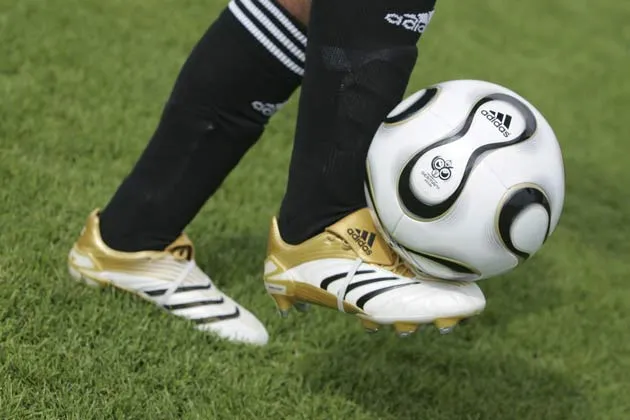
In the opening match of soccer's World Cup Friday, German midfielder Torsten Frings scored an amazing goal from 40 yards out. The ball started off straight and then tailed sharply to the right in the last 10 yards or so. It was an unstoppable shot, but with a different ball it might have been a simple save.
A scientist has explained why a new ball being used in this year's World Cup is frustrating goalies.
The new Adidas Teamgeist football, as it is called, has 14 panels instead of the 26 or 32 that traditionally create the hexagonal pattern.
Fewer panels means fewer seams, which will make the ball behave more like a baseball, says Ken Bray, a sports scientist at the University of Bath in the UK.
Complex whirls of air cause a spinning ball to drift toward the side that's spinning away from the ball's direction of movement [learn why ]. A ball that's not spinning can bounce around unpredictably. Pitchers rely on this physics when throwing knuckleballs.
A good knuckleball is crazy because the ball rotates lazily in the air and the seams disrupt the air flow around the ball at certain points on the surface, Bray said.
"With a very low spin rate, which occasionally happens in football, the panel pattern can have a big influence on the trajectory of the ball and make it more unpredictable for a goalkeeper," Bray said last week.
Get the world’s most fascinating discoveries delivered straight to your inbox.
Bray suggests one way to watch for the effect on TV.
"Watch the slow motion replays to spot the rare occasions where the ball produces little or no rotation and where goalkeepers will frantically attempt to keep up with the ball’s chaotic flight path," he said.
More Sports Science
- World Cup Science: Tricky Shots and Blind Referees
- Fourth and Goal: NFL Coaches Make Lousy Decisions
- Busting Baseball Myths: Scientist Throws Big Curveballs
- Baseball Science: Better Hitters See Ball as Bigger
- On Mars, Curveballs Become Screwballs
- Study Finds Kids Can't Hit Slow Pitches

Robert is an independent health and science journalist and writer based in Phoenix, Arizona. He is a former editor-in-chief of Live Science with over 20 years of experience as a reporter and editor. He has worked on websites such as Space.com and Tom's Guide, and is a contributor on Medium, covering how we age and how to optimize the mind and body through time. He has a journalism degree from Humboldt State University in California.