













Photos: Tomb Reveals Murderous Tale of China Empress

Little is left of the skeletons of Yan Shiwei and his wife, Lady Pei, but epitaphs on their 1,300-year-old tomb tell quite a brutal tale: Shiwei not only helped China's first female emperor rise to power but he was then executed by her. Here's a look at the treasures found inside the couple's tomb.
A story of power
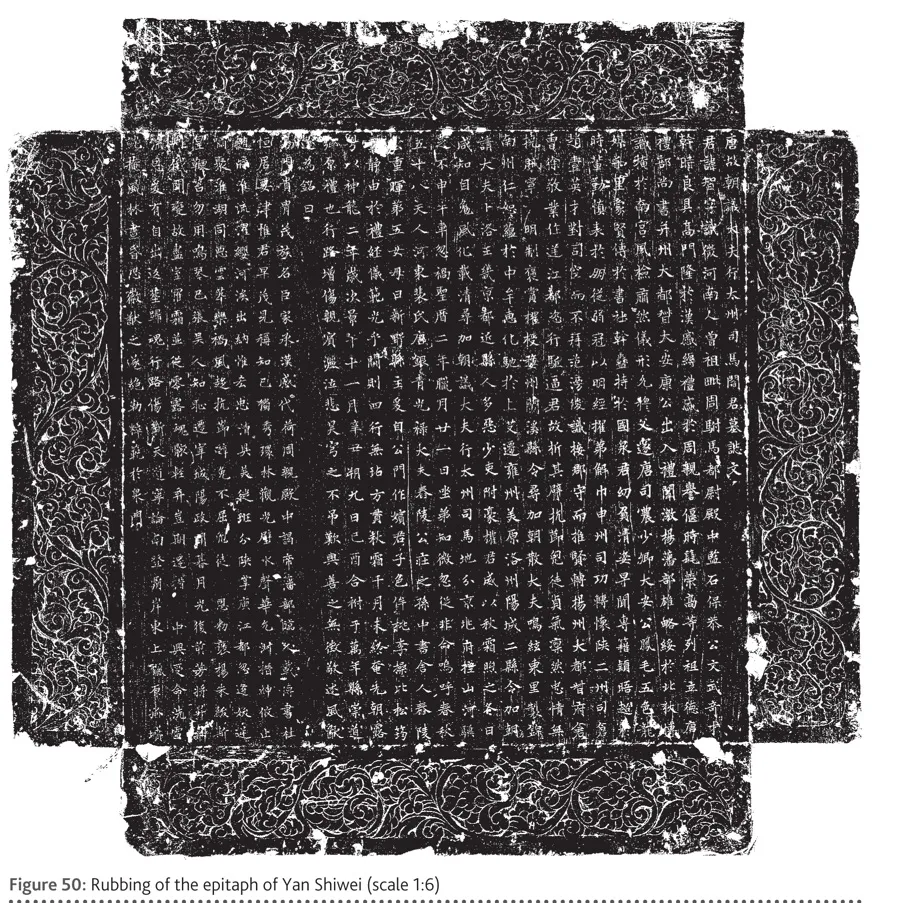
Within the tomb, archaeologists found a variety of artifacts, including epitaphs, inscribed on bluestones, which tell this couple's story. According to the epitaphs, Yan Shiwei helped Wu Zetian, the only female emperor to ever rule China, rise to power; she later executed Yan Shiwei and his entire family.
This image shows a "rubbing" of one of the epitaphs. To create a rubbing, a soft material is lightly impressed against the stone inscription, resulting in a highly detailed copy. Researchers all over the world use this technique. This particular epitaph describes part of Yan Shiwei's life. (Credit: Chinese Cultural Relics)
Beautiful details

Among the artifacts found in the tomb is this mirror with a gold plaque on the back. The plaque is in the shape of a flower petal and is decorated with images of animals and grapes. It was buried with Lady Pei. (Credit: Chinese Cultural Relics)
Detail and colors
Get the world’s most fascinating discoveries delivered straight to your inbox.

The tomb contains a variety of colorful ceramic figurines. Here, a figure of a deity known as a "heavenly king," who is shown wearing body armor while stepping on a bull. Buddhists believe there are four heavenly kings. It is about 79 centimeters (31 inches) in height. (Credit: Chinese Cultural Relics)
Inspired leadership

Another figurine of a heavenly king found in the tomb rises about 75 centimeters (30 inches) high. Researchers note that he has a handlebar mustache and a hair bun. (Credit: Chinese Cultural Relics)
Security

This figurine shows a tomb guardian with an angry human face. Tomb guardians were commonly used in ancient China and helped to protect the dead. It's about 92 centimeters (36 inches) in height. (Credit: Chinese Cultural Relics)
Angry protectors

Another tomb guardian, this one with a flame-shaped mane at the back of his head, the researchers note. It's about 95 centimeters (37 inches) in height. (Chinese Cultural Relics)
Royalty's headgear

The remains of a headdress found in the tomb was found in about 300 pieces. A project is underway to try to reconstruct it. The headdress contains a variety of materials, including gemstones, pearls and feathers, the researchers said.
Animals for the afterlife

Some of the ceramic figurines found in the tomb depict animals. This colorful camel is about 65 centimeters (26 inches) in height. (Credit: Chinese Cultural Relics)
Going for a ride

This image shows a female rider, wearing a short-sleeved jacket, on a horse. The figurine is about 41 centimeters (16 inches) in height.
Follow Live Science @livescience, Facebook & Google+.

Owen Jarus is a regular contributor to Live Science who writes about archaeology and humans' past. He has also written for The Independent (UK), The Canadian Press (CP) and The Associated Press (AP), among others. Owen has a bachelor of arts degree from the University of Toronto and a journalism degree from Ryerson University.