













New cracks found on International Space Station

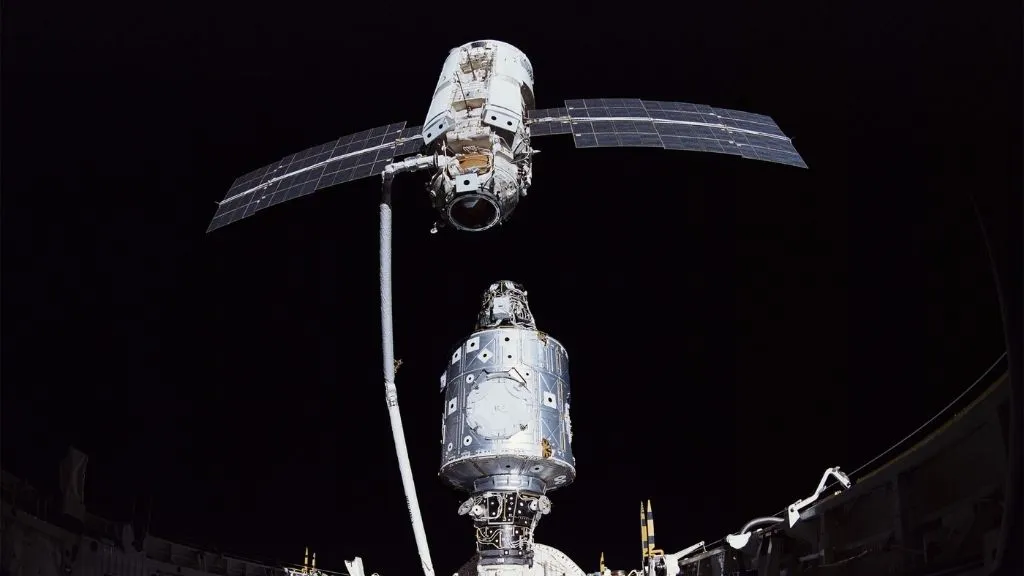
Russian cosmonauts discovered cracks on the Zarya module of the International Space Station (ISS) and are concerned that the fissures could spread over time, a senior space official reported on Monday (Aug. 30).
"Superficial fissures have been found in some places on the Zarya module," Vladimir Solovyov, chief engineer of rocket and space corporation Energia, told RIA news agency, according to Reuters. "This is bad and suggests that the fissures will begin to spread over time." The Zarya module, also called the Functional Cargo Block, was the first component of the ISS ever launched, having blasted into orbit on Nov. 20, 1998, according to NASA.
Solovyov recently stated that the ISS is beginning to show its age and warned that there could potentially be an "avalanche" of broken equipment after 2025, according to Reuters.
Related: 7 everyday things that happen strangely in space
The emergence of these new cracks follows several recent incidents on the ISS. In March, Russian cosmonauts sealed two small cracks — about as wide as human hairs — in the Zvezda module, Space.com reported. The Zvezda module contains living quarters for two cosmonauts and supports the station's life support systems, along with backup life support systems in the U.S. portion of the station. The tiny cracks in the module were thought to be the source of an air leak that NASA and Russia's space agency Roscosmos had been investigating for months.
RELATED CONTENT
And in August, the jet thrusters on the Russian research module Nauka unexpectedly fired and pushed the entire station out of place, according to Space.com. The module had just docked at the station hours before, and when the thrusters suddenly misfired, Nauka essentially tried to pull away from its docking point, pulling the ISS with it.
Russian officials said that a software glitch and a touch of human error likely led to the incident, according to Reuters.
Get the world’s most fascinating discoveries delivered straight to your inbox.
Read more about the new cracks in the Zarya module in Reuters.
Originally published on Live Science.

Nicoletta Lanese is the health channel editor at Live Science and was previously a news editor and staff writer at the site. She is a recipient of the 2026 AHCJ International Health Study Fellowship, with a project focused on antibiotic stewardship practices in Japan and the U.S. They hold a graduate certificate in science communication from UC Santa Cruz and degrees in neuroscience and dance from the University of Florida. Beyond Live Science, Lanese's work has appeared in The Scientist, Science News, the Mercury News, Mongabay and Stanford Medicine Magazine, among other outlets. Based in NYC, she also remains involved in dance and performs in local choreographers' work.