













Ancients Traveled 1,800 Miles for Pretty Axes

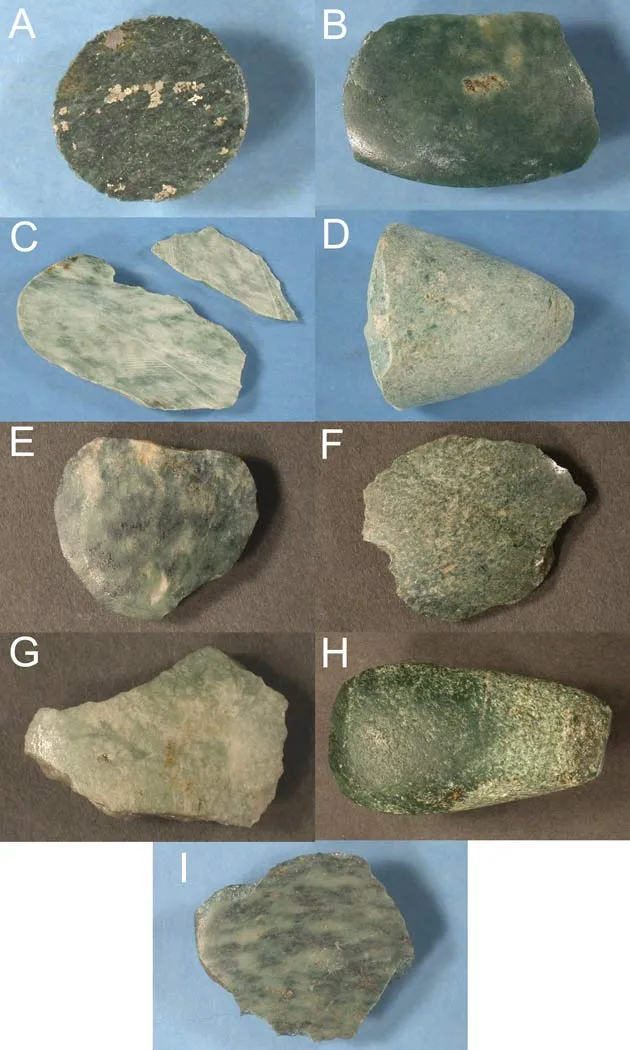
For millennia, people have gone to great lengths to get pretty things. Take, for example, early West Indian groups that apparently braved journeys of up to 1,800 miles by canoe to trade for ornamental axes.
The trips are suggested by newfound axes made from a rare kind of jade.
The items were found on the Caribbean island of Antigua and date from between 250 and 500 AD. They could have only come from a primary source in far away Guatemala, tests show, prompting anthropologists to re-evaluate the ocean-faring skills of the settlers from that area.
Trade secrets revealed
Until now, it was assumed that the early Antiguans—called the Saladoid—only had contact southward with people in South America, said George Harlow, mineralogist with the American Museum of Natural History and co-author of a study on the new research.
“The best hypothesis now is that there must have been trade going on between Antigua and Guatemala,” Harlow told LiveScience. “This is a relationship we haven’t seen before in the Eastern Caribbean.”
The artifacts found were fashioned from jadeite jade—a specific variety that is different from the more common nephrite jade, found in abundance around the world. Harlow used new techniques to examine the mineral composition of the jadeite jade found in Antigua and the only possible match was a distinct source south of an earthquake fault in Guatemala.
Get the world’s most fascinating discoveries delivered straight to your inbox.
“What’s more, only finished objects were found,” he said. The absence of unfinished bits and pieces of jadeite jade means that the Saladoid people did not modify the stones in Antigua, Harlow said. “They have to have known about them and wanted them enough to make the trip.”
Point of prestige
Jadeite jade in general is thought more beautiful and durable than its nephrite counterpart. While the specimens found in Antigua aren’t of the highest quality jadeite, the talismen would still have been considered exotic prestige goods by the Saladoid and were probably carried or worn by high-ranking members of the society, Harlow said.
“Groups in Central America called jadeite jade the ‘stone of the loin,’” Harlow said. “It’s possible it was thought to have some health properties.”
Jadeite jade was worn and worshipped by the Maya, Olmec and Aztec people of Central America for at least two millennia before the arrival of Columbus.
Aside from Guatemala, the world’s only other known source of jadeite jade is Myanmar (Burma). Further testing by the American Museum of Natural History—using non-invasive techniques like X-ray diffraction—will look at other potential sources in fragments taken from Cuba and Puerto Rico.
Getting access to the material has sometimes been difficult, however, according to Harlow. “Archaeologists are still worried we’ll damage the artifacts, despite the improvement in technology,” he said.
The findings are published in a recent edition of the journal Canadian Mineralogist.
