













Like Monkeys, Babies Know Math

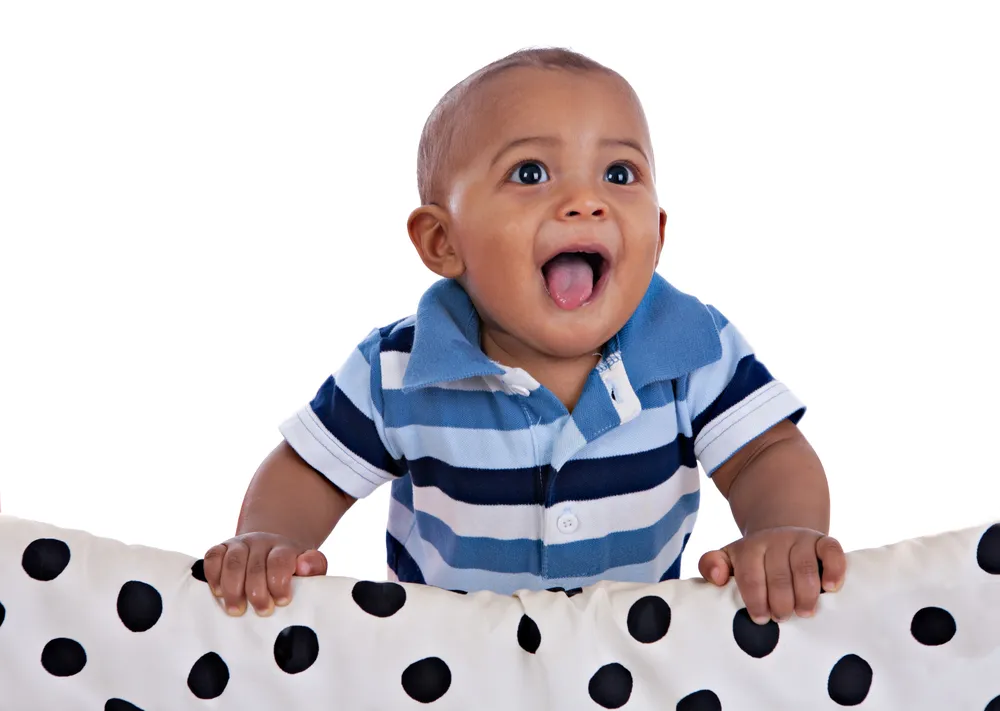
After long suspecting we're born with some math sense, researchers have shown infants indeed have some ability to count long before they can demonstrate it to Mom and Dad.
It turns out they're not unlike grown monkeys.
In the study, seven-month-old babies were presented with the voices of two or three women saying "look." The infants could choose between looking at a video image of two or women saying the word or an image of three women saying it. The babies spent significantly more time looking at the image that matched the number of women talking.
"We conclude that the babies are showing an internal representation of 'two-ness' or 'three-ness' that is separate from sensory modalities and, thus, reflects an abstract internal process," said Elizabeth Brannon of Duke University.
Previous work with monkeys yielded similar findings.
"These results support the idea that there is a shared system between preverbal infants and nonverbal animals for representing numbers," Brannon said.
Previous studies searching for this ability in human infants had failed, say Brannon and colleague Kerry Jordan, because the methods were inadequate.
Get the world’s most fascinating discoveries delivered straight to your inbox.
The study, announced today, is published in the Proceedings of the National Academy of Sciences. The research is pursued in an effort to better understand the evolutionary origins of numerical ability and how that ability has developed in humans.
- Math Made Easy: Study Reveals 5-year-olds' Innate Ability
- Darwin's Natural Selection Still at Work in Humans
- No Birdbrain, Parrot Grasps Concept of Zero
- Monkey Math Mirrors Our Own

Robert is an independent health and science journalist and writer based in Phoenix, Arizona. He is a former editor-in-chief of Live Science with over 20 years of experience as a reporter and editor. He has worked on websites such as Space.com and Tom's Guide, and is a contributor on Medium, covering how we age and how to optimize the mind and body through time. He has a journalism degree from Humboldt State University in California.