
 Live Science Plus


Love Hormone Could Also Lead to War

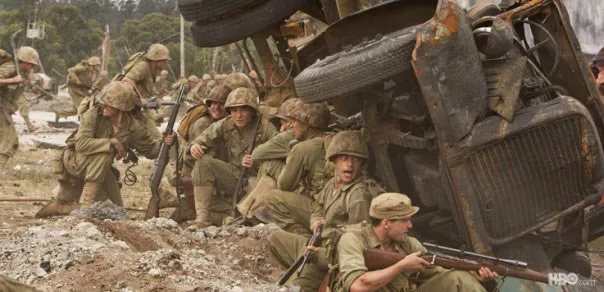
A brain hormone that fosters fuzzy feelings between mothers and children may also goad soldiers to launch preemptive strikes in defense of their comrades, according to new research.
Oxytocin has received much attention for boosting social bonding and cooperation, but it also appears to trigger defensive aggression against outsiders who might threaten an individual's social group, psychologists say. That indicates the hormone has a much more complex role in social dynamics than just encouraging humans to make love and not war.
"Our study shows that oxytocin not only plays a role in modulating cooperation and benevolence, but also in driving aggression," said Carsten De Dreu, a social psychologist at the University of Amsterdam in the Netherlands.
De Dreu took special interest in parochial altruism, in which people self-sacrifice for the sake of their group or defensively hurt competing groups. He and his colleagues have now fingered oxytocin as a likely neurobiological mechanism that drives how humans regulate intergroup conflict.
Some animal studies had shown that oxytocin encourages protectionist behavior, but this marks the first study to illustrate a similar effect in humans. De Dreu and his colleagues had reasoned that this "dark side" of cooperation makes sense from an adaptive, evolutionary perspective of competing groups.
"We were interested in seeing where oxytocin's 'niceness' breaks down," De Dreu told LiveScience.
Fearing the worst
To study the dark side of oxytocin, the Dutch researchers ran three experiments based on financial games that represented variations on the classic prisoner's dilemma scenario. The games pitted self-interest against the overall interest of each three-person group, and also added the possibility of hurting a competing three-person group. Individuals could either keep a certain sum of money or put it into a group pool in which the individual got less but the whole group benefited more.
Male volunteers who took a whiff of oxytocin through a nasal spray tended to act more in the interests of the group (sharing their money) rather than selfishly, unsurprisingly. They also tended to make choices that benefited their group but did not hurt outsiders during the first experiment.
The second experiment showed that oxytocin affected people regardless of their natural tendencies to cooperate.
But the real twist came during the third experiment involving 79 males, who took either oxytocin or a placebo. Rather than having a certain amount of money to spend, the group decision-makers simply chose whether to cooperate or not cooperate with an outsider group.
That choice led to four possible outcomes, depending on what the outsider group also chose. The two groups received a moderate reward if they both cooperated and a lesser reward if they both chose to not cooperate. But if an outsider group chose to not cooperate, the in-group was better off also not cooperating. Cooperating with outsiders who had chosen not to cooperate led to the worst-case scenario.
Decision-makers under the influence of oxytocin acted protectively by not cooperating with an opposing group, as researchers had predicted. Such noncooperation in the third experiment was considered a preemptive strike or defensive aggression, because the group acted to protect itself against possible harm from the outsiders.
The third experiment also showed that oxytocin encouraged defensive aggression against outsider groups when there was greater fear of such groups, De Dreu explained. Researchers manipulated the fear factor by increasing the financial hurt that outsiders could inflict upon a group.
Similarly, the third experiment also tested the greed factor by giving the in-group more rewards if it acted competitively against outsiders. But the results showed that oxytocin did not encourage such offensive aggression, in which a group would "hurt" another group without having been provoked, aimed only at winning more rewards.
Not all love and peace
Researchers cautioned that the findings only apply to males so far, given that no females participated in the experiments. But the results may have relevance to understanding male-dominated conflicts, ranging from prehistoric hunter-gatherer skirmishes to .
"The most important practical implication is that we should stop treating oxytocin as a panacea for distrust and conflict," De Dreu pointed out.
In other words, giving oxytocin to everyone in the world won't necessarily usher in a new era of peace and prosperity. It might even spur more paranoia and conflict between different groups or nations.
"Giving soldiers oxytocin might make them more cooperative towards their comrades, even willing to self-sacrifice," De Dreu said. "But it should [also] make them more likely to launch a preemptive strike against the competing army, with conflict-escalation being the most likely consequence."
Next up, De Dreu and his colleagues have begun studying whether oxytocin enhances motivations to protect the group, protect the individual within the group, or more broadly to protect the weak and vulnerable.
The study will be published in the June 10 issue of the journal Science.
- Fight, Fight, Fight: The History of Human Aggression
- Top 10 Things You Didn't Know About the Brain
- Top 10 Things That Make Humans Special
Get the world’s most fascinating discoveries delivered straight to your inbox.
