













Shoes Found in 13th Century Trash Pile

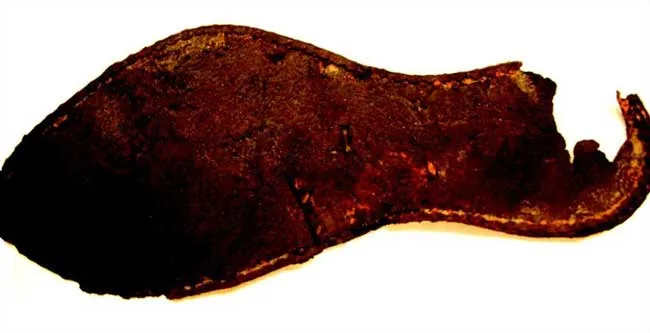
A batch of well-preserved shoe soles have been found in an ancient trash dump in Lyon, France. They date from the 13th to the 18th centuries.
Older shoes have been found, including one from 2,000 years ago discovered in 2005 in a hollow tree trunk in southwest England. Sandals from 10,000 years ago were found in a cave in Oregon and are said to be the oldest footware ever found.
Humans began wearing shoes about 40,000 years ago, a study last year revealed.
The newfound leather soles, buried in mud, will improve understanding of how leather can be preserved and help scientists restore other leather artifacts, the discoverers said.
Michel Bardet and colleagues at the French Atomic Energy Commission detailed the findings in the American Chemical Society journal Analytical Chemistry.
Bardet explained that leather consists of collagen, a tough protein that is in human bones, too, and which can remain intact hundreds of thousands of years under ideal conditions — such as the oxygen-deprived environment in the mud. An examination of the soles found that tannin, which helps to preserve leather, had been washed out and replaced by iron oxides that leached into the leather from surrounding soil and helped preserve the soles in the absence of the tannins.
Bardet has studied ancient wood artifacts, too.
Get the world’s most fascinating discoveries delivered straight to your inbox.
"One thing that was interesting for us ... is that both [wood and leather] are what we call 'waterlogged' materials. It's organic matter full of water," he said. "Generally, when we are working on wood found in similar conditions, the wood is in very poor condition.... Most of the cellulose has been destroyed. In the case of leather, the material seems to be in better preservation."
- Video - 1.5 Million-Year-Old Footprints Found
- The Science of Getting Around
- Flip-Flops Bad For Feet

Robert is an independent health and science journalist and writer based in Phoenix, Arizona. He is a former editor-in-chief of Live Science with over 20 years of experience as a reporter and editor. He has worked on websites such as Space.com and Tom's Guide, and is a contributor on Medium, covering how we age and how to optimize the mind and body through time. He has a journalism degree from Humboldt State University in California.