













What's the Difference Between Dark and White Turkey Meat?
Schools are closed on Thanksgiving, but the learning doesn't have to stop. As you carve your turkey this year, delight your tikes with a fun biochemistry lesson about myoglobin.
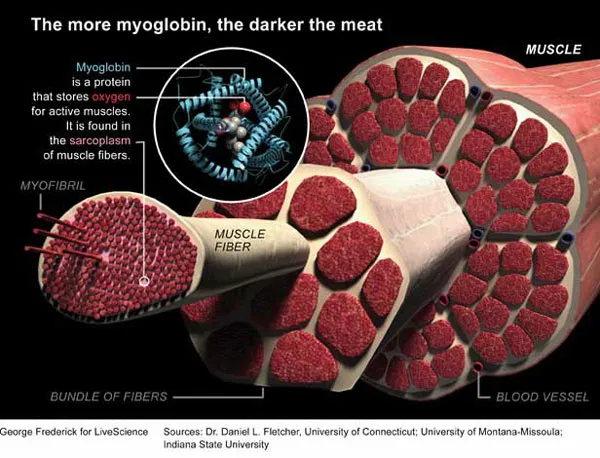
Myoglobin is similar to hemoglobin, which gives blood its bright red color and carries oxygen through the bloodstream. Myoglobin is found in muscle tissue and also has an affinity for oxygen.
"It is the binding state of oxygen to the myoglobin that creates the variation in meat color," explains Daniel L. Fletcher at the University of Connecticut Department of Animal Science. "The more myoglobin, the darker the meat."
Turkey meat is turkey muscle. Muscles are made of two types of fibers: Fast-twitch fibers contract quickly for infrequent bursts of activity. Durable slow-twitch fibers are used for regular, extended periods of activity.
All that exercise makes the slow-twitchers suck wind. Luckily, myoglobin keeps a supply on hand.
Myoglobin latches onto oxygen and squirrels it away in muscles until the muscles become tired. Muscles that are used more regularly contain more myoglobin. Turkeys use their legs continuously, which is why thighs and drumsticks are dark meat. Flightless domestic turkeys don’t use their chest muscles much. Their well-rested breasts become our white meat.
Varying amounts of myoglobin between species accounts for the difference in meat colors. "Chicken breast meat has little myoglobin and therefore is white," Fletcher said. "Beef has lots of myoglobin and therefore is dark."
Get the world’s most fascinating discoveries delivered straight to your inbox.
Follow Life's Little Mysteries on Twitter @llmysteries. We're also on Facebook & Google+.