














Hawaiian Island Dissolving from Inside

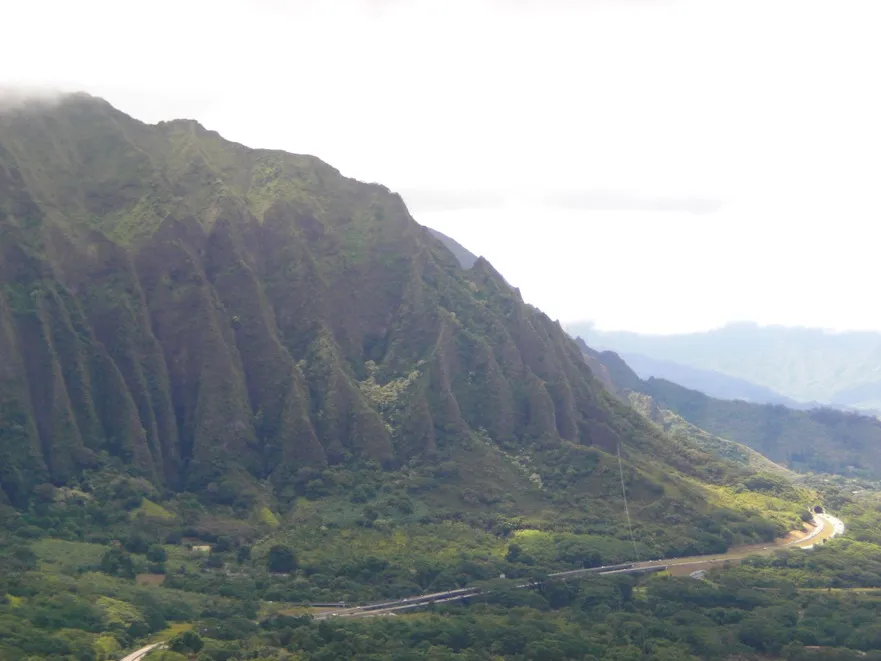
The volcanic peaks of Oahu, the Hawaiian island where Honolulu sits, are slowly deteriorating from within and the island will eventually become flat and low-lying, new research shows.
But there's no need to worry in the short term: due to geological processes beneath the island it will continue rising for 1.5 million years before the mountain's dissolution catches up with it, according to the study, published recently in the journal Geochimica et Cosmochimica Acta. Rather than being washed away by above-ground erosion, however, the mountain is more quickly breaking down on the inside, said Brigham Young University geologist and co-author Steve Nelson in a statement from the school.
"We tried to figure out how fast the island is going away and what the influence of climate is on that rate," Nelson said. "More material is dissolving from those islands than what is being carried off through erosion."
The researchers measured the amount of material dissolved by groundwater and above-ground rainwater on the island of Oahu, finding that the former was three to 12 times more destructive. The researchers took samples and measurements in the field and the lab to determine how much mass is lost from the island each year.
As the island moves to the northwest it is rising slightly, which more than compensates for water's weathering effects for the near future, according to the statement.
Reach Douglas Main at [email protected]. Follow him on Twitter @Douglas_Main. Follow OurAmazingPlanet on Twitter @OAPlanet. We're also on Facebook and Google+.
Get the world’s most fascinating discoveries delivered straight to your inbox.
