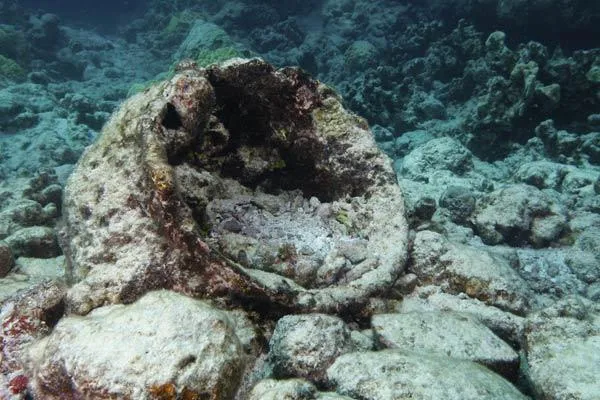
Researchers have positively identified the wreck of a Nantucket whaling ship that went down in 1823 near the French Frigate Shoals, a remote atoll in the Pacific Ocean.
Officials from Hawaii's Papahanaumokuakea Marine National Monument were slated to announce the find at a news conference today (Feb. 11), exactly 188 years to the day after the ship, Two Brothers, rammed a reef roughly 560 miles (902 kilometers) northwest of Honolulu and sank, the Associated Press reported. [Related: Shipwreck Alley's Sunken Treasures .]
Marine archeologists with the National Oceanic and Atmospheric Administration first saw the ship's anchor in 2008 while surveying French Frigate Shoals.
On subsequent expeditions in 2009 and 2010, researchers discovered more artifacts including blubber hooks, five whaling harpoon tips, whaling lances, cast-iron cooking pots and other items that indicated the wreck was from the United States.
Additional scholarly research provided first-hand accounts from Two Brothers crew members, including an approximate location of where the ship grounded, which matched the location of the wreckage.
A blubber hook, a tool used in the messy process of carving up a whale.
(Image credit: NOAA/Greg McFall.)
The entire crew of about 20 men survived the 1823 sinking, and were picked up the following morning by another whaling ship that was sailing with Two Brothers.
Two Brothers was the second ship to sink under the command of George Pollard Jr., a sea captain who was at the helm of the ill-fated Essex, a ship that was attacked and sunk by a sperm whale just two years earlier.
Sign up for the Live Science daily newsletter now
Get the world’s most fascinating discoveries delivered straight to your inbox.
The incident served as inspiration for Herman Melville's novel "Moby-Dick." When the Essex sank, Pollard and his crew drifted for three months before their rescue, and resorted to cannibalism during their ordeal, eating one of the captain's cousins.
Kelly Gleason, the marine archeologist who led the search for the wreck of the Two Brothers, said the artifacts recovered from the ship's wreckage will go on display in Hawaii, and may eventually travel to Nantucket.
For the science geek in everyone, Live Science offers a fascinating window into the natural and technological world, delivering comprehensive and compelling news and analysis on everything from dinosaur discoveries, archaeological finds and amazing animals to health, innovation and wearable technology. We aim to empower and inspire our readers with the tools needed to understand the world and appreciate its everyday awe.