














German Lobsters Hurt by WWII Could Get Help from Wind Farm

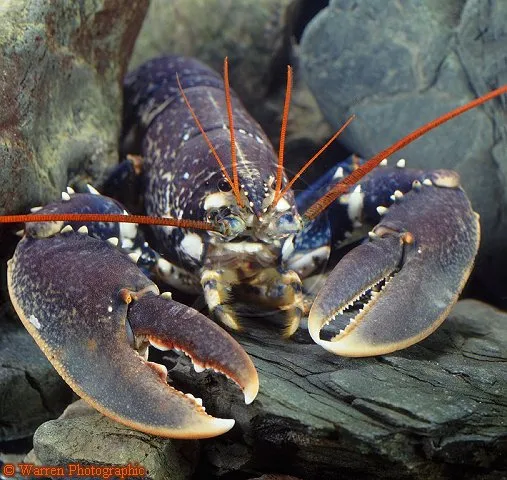
A new programaimed at helping lobsters battered by World War II will breed 3,000 lobsters and release them next year at the site of a wind farm in Germany's North Sea.
Local populations near Heligoland have declined by 90 percent in the last 70 years, Reuters reports. Some scientists blame their decline on incessant bombing by the British during and after World War II, when the area was home to a German fort. The animals need a firm seabed to thrive, which is why the wind farm should be a good place to live. "The new wind parks mean lobsters may settle in a new habitat, because the stony foundations offer a favorable environment," project leader Heinz-Dieter Franke told Reuters.
The scheme, which will cost $923,500 (700,000 Euros), is "funded by compensation paid to the state of Lower Saxony by utility EWE for any potential ecological damage caused by the construction of its wind park," according to Reuters. "The money will fund breeding, reintroduction and monitoring of the lobsters for roughly two years."
Email Douglas Main or follow him @Douglas_Main. Follow us @livescience, Facebook or Google+.
Get the world’s most fascinating discoveries delivered straight to your inbox.
