













People Who Volunteer Live Longer, Study Suggests
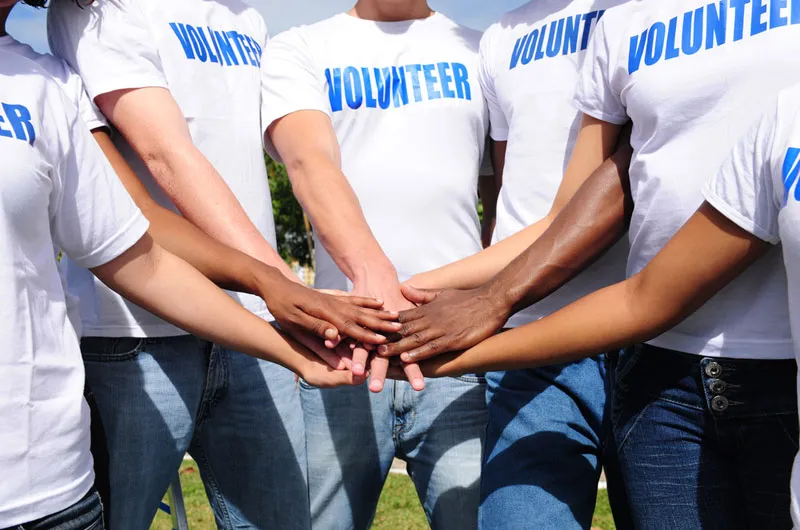
People who volunteer for selfless reasons, such as helping others, live longer than those who don't lend a helping hand, a new study shows. However, those who volunteer for more self-centered reasons do not reap the same life-extending benefits.
"This could mean that people who volunteer with other people as their main motivation may be buffered from potential stressors associated with volunteering, such as time constraints and lack of pay," study researcher Sara Konrath of the University of Michigan said in a statement.
(Past research suggested another benefit for selfless volunteers — a date. Apparently women rate such altruism high on their list of desirable traits in a mate.)
Konrath and colleagues looked at results from the Wisconsin Longitudinal Study, which has followed a random sample of 10,317 Wisconsin residents from their high school graduation in 1957 until the present. In 2008, the average age of the participants was about 69, and about half of the participants are female.
In 2004, the participants reported how often they had volunteered within the past 10 years. They also explained their reasons for volunteering, or, in the cases of those who had not volunteered but were planning to, the reasons they would.
Some of the participants' motives were more oriented toward others, such as "I feel it is important to help others" or "Volunteering is an important activity to the people I know best." Other respondents, however, had more self-oriented reasons for volunteering, such as "Volunteering is a good escape from my own troubles," or "Volunteering makes me feel better about myself."
Researchers then compared the participants' responses with physical health information that had mostly been collected in 1992. The researchers also considered the respondents' socioeconomic status, mental health, social support, marital status and health risk factors, including smoking, body mass index and alcohol use.
Get the world’s most fascinating discoveries delivered straight to your inbox.
The findings showed that those who volunteered for more altruistic reasons had lower mortality rates as of 2008 than people who did not volunteer. Of the 2,384 non-volunteers, 4.3 percent were deceased four years later, compared with 1.6 percent of altruistic volunteers who had died.
However, people who said they volunteered for their own personal satisfaction had nearly the same mortality rate (4 percent) as people who did not volunteer at all.
"It is reasonable for people to volunteer in part because of benefits to the self; however, our research implies that, ironically, should these benefits to the self become the main motive for volunteering, they may not see those benefits," said study researcher Andrea Fuhrel-Forbis, also of the University of Michigan.
The study was published in August in the journal Health Psychology.
You can follow LiveScience writer Remy Melina on Twitter @remymelina. Follow LiveScience for the latest in science news and discoveries on Twitter @livescience and on Facebook.