
 Live Science Plus


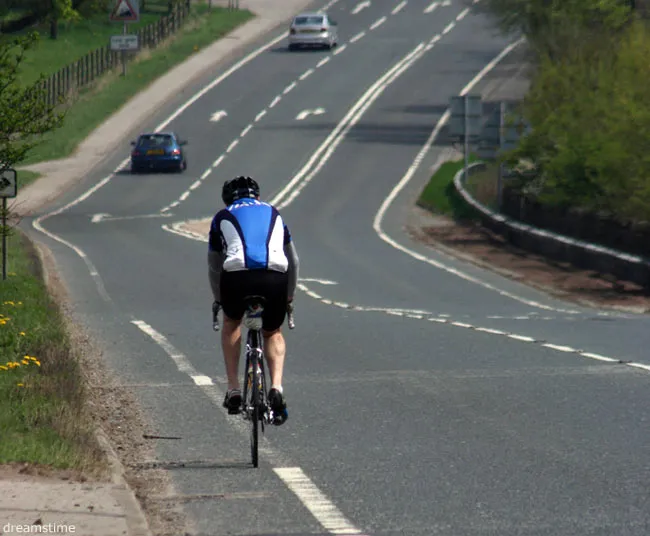
Lance Armstrong and Bernard Hinault are the world's top cyclists of the past 50-plus years in a new ranking of Tour de France competitors that some statisticians say avoids the subjective pitfalls of previous methods of determining standings.
The finding is based on applying statistical methods used in the fields of biomedicine and immunology.
With the completion last month of the 94th Tour de France, more than 10,000 riders have pedaled their way from Paris to the Pyrenees and back. The biggest cycling event in the world has long challenged record keepers to devise a fair system of ranking athletes past and present in a way that gives proper weight to individual stage times and other race particulars.

Part of the problem with previous methods is that a cyclist's accolades (awarded in the form of colored jerseys) do not easily add up to one tidy score.
In addition to stage victories, there are several objectives a rider can aim to accomplish, each with its own fashion statement, from fastest overall time (yellow jersey) to most points as determined by passing order (green jersey) to best hill climber (polka-dot jersey).
The standard ranking method focuses on assigning different weights to the various jerseys and stage completion times, and then summing those weights to get a single number. Biostatistician Knut M. Wittkowski found this statistical method—used in arenas from the Olympic games and financial markets to experimental drugs—to be unfairly subjective.
"The problem is that for different sets of weights you get a different ranking," Wittkowski told LiveScience. "There is no objective way to determine which rankings are correct."
Get the world’s most fascinating discoveries delivered straight to your inbox.
At Rockefeller University in New York, Wittkowski developed a technique for objectively ranking the impact of various side effects on a patient's drug tolerance. But he quickly realized that the method's breadth of applications stretched beyond biomedicine, especially when he discovered other statisticians, unaware of his own research, developing the same method for use by economists.
The method does assume that certain criteria are more important than others, but does not quantify the differences. "As long as the highest achievement [e.g., the yellow jersey] is assigned as the most important, more important than the next achievement, we can capture all the information without any particular weight assignment," Wittkowski said.
The Tour de France criteria used by Wittkowski, in order of importance as determined by sports journalists, are: 1) the yellow jersey, 2) second place in the final results, 3) third place in the final results, 4) stage victory, 5) green jersey and 6) polka dot jersey.
So the worth of a yellow jersey is set as equal to that of second place in the final results plus some extra value. That value is not quantified, but its presence is used in calculating the final ranking.
Wittkowski mined records from the past 54 years of the Tour to construct the new list, which he claims reflects the skill of the racers, rather than some statistician's bias.
"We have a scoring system that is intrinsically valid, that makes no assumptions," Wittkowski said. "And it can be used in all sorts of fields—sports, real estate, financial systems."
The report may assuage French cycling fans, who have had faced a dearth of champion cyclists since Bernard "The Badger" Hinault last won in 1985.
Hinault ties with Armstrong in the revised rankings, though he has five yellow jerseys to Armstrong's seven. The pair is followed by Eddy Merckx (with five yellow jerseys and the most stage victories of any cyclist), Jacques Anquetil and Miguel Indurain.
The statisticians also applied the new ranking system to current racers in order to see how they might stack up to the legends in years to come. The top five in that list are Alberto Contador (this year's yellow jersey winner), followed by Ivan Basso, Tom Boonem, Erik Zabel and Andreas Kloden.
- VIDEO: Exercise and Genetics
- Red Outfits Give Athletes Advantage
- The Most Important Exercise Tip