New Wisdom on Ancient Skeleton's Teeth

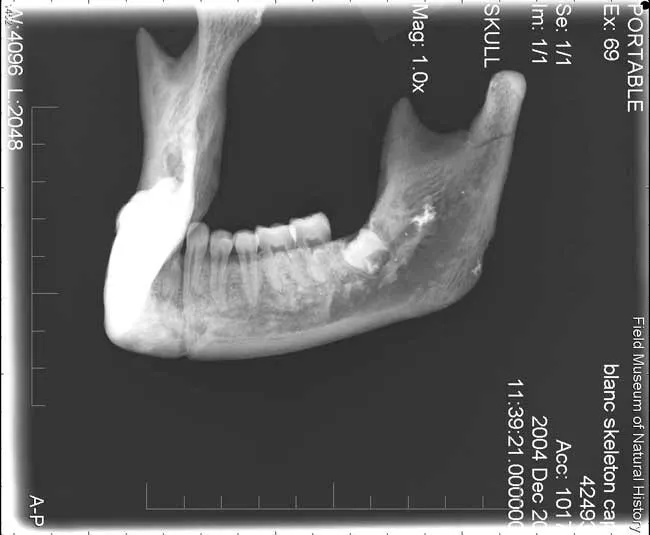
She's not a girl but is now a woman. No, we're not talking about Britney Spears, but the Magdalenian Girl, the skeleton of an early modern human housed at the Field Museum in Chicago since 1926.
For years, these bones dating from 13,000 to 15,000 years ago were thought to be from a girl because her wisdom teeth had not yet erupted, something that typically should happen between the ages of 18 and 22. But new analyses provide evidence that she was in fact a 25- to 35-year-old woman at the time of death.
And the Magdalenian Girl's impacted wisdom teeth, which had failed to emerge at the normal time, provide new clues about the dietary changes of humans.
Because the coarse diet of early humans required a lot of chewing, there was more growth stimulation of the jawbone and more room for wisdom teeth to emerge. But when they started cooking their food and making it softer, the wisdom teeth had more trouble surfacing.
"Finding impacted wisdom teeth 15,000 years ago indicates that the human diet might have already changed, some would say 'deteriorated,' earlier than previously thought," said Robert Martin, Field Museum provost and primatologist.
The Magdalenian Girl was discovered in 1911 in southwestern France in the Cap Blanc rock shelter and is considered the most complete Upper Paleolithic skeleton in North America.
"Magdalenian Girl has once again proven the value of museum collections, which often contain unexpected secrets that are only revealed as new methods and techniques emerge," said William Pestle, Field Museum Collection Manager and bone specialist.
Get the world’s most fascinating discoveries delivered straight to your inbox.
The famous skeleton can be found on display as part of "Evolving Planet," the museum's permanent exhibit of life on Earth starting March 10.
- Something Fishy: How Humans Got So Smart
- Gigantic Apes Coexisted with Early Humans, Study Find
- Humans vs. Neanderthals: Game Over Earlier
