















Images: The Ancient Rock Lines of Peru

Chinca Valley Mound

Chinca Mono B, a 66-foot by 75-foot (20 meters by 23 meters) U-shaped mound. The short end of the mound points to the sunset on the June solstice. [Read more about the discovery of the mound]
Mound Excavation

The excavation of Mono B, which was found to date to between 360 B.C. and 210 B.C. [Read More: Ancient Culture Built Solstice Lines & Mounds]
Rock Lines

Two rock lines dating back about 2,300 years. These mark the June solstice sunset.
Peruvian Rock Lines

A distant look at the two solstice-marking lines, with a person for scale.
Solstice Lines

A view of two rock lines that mark the June solstice with a person for scale.
Day Before Solstice

Two student archaeologists atop the Chinca Valley Mono B mound on June 20, 2013, the day before the winter solstice. On the solstice day, the sun would fall on the heads of those on the mound when viewed from behind the structure, archaeologist Charles Stanish of UCLA told Live Science. The mound was intentionally built for this effect, Stanish said.
Mound Before Solstice
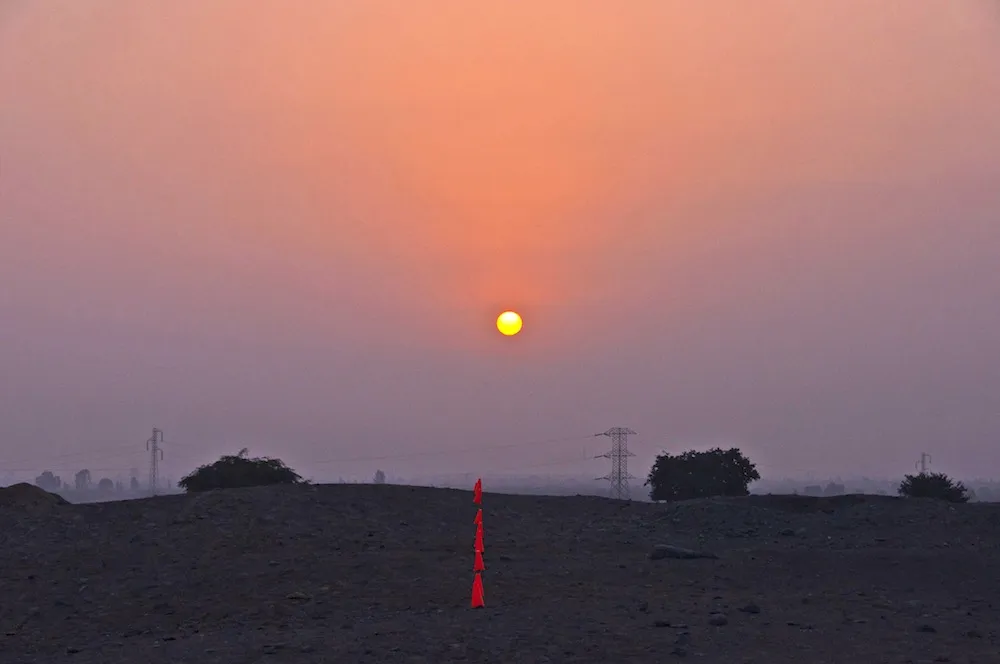
Mono B on the day before solstice (June 20) in 2013. A marker points to the solstice sunset.
Get the world’s most fascinating discoveries delivered straight to your inbox.
Solstice Mound

The Mono B mound before solstice, with annotations explaining how this astronimcal marker functioned.

Stephanie Pappas is a contributing writer for Live Science, covering topics ranging from geoscience to archaeology to the human brain and behavior. She was previously a senior writer for Live Science but is now a freelancer based in Denver, Colorado, and regularly contributes to Scientific American and The Monitor, the monthly magazine of the American Psychological Association. Stephanie received a bachelor's degree in psychology from the University of South Carolina and a graduate certificate in science communication from the University of California, Santa Cruz.