 Live Science Plus





You are now subscribed
Your newsletter sign-up was successful
Want to add more newsletters?
Delivered Daily
Daily Newsletter
Sign up for the latest discoveries, groundbreaking research and fascinating breakthroughs that impact you and the wider world direct to your inbox.
Once a week
Life's Little Mysteries
Feed your curiosity with an exclusive mystery every week, solved with science and delivered direct to your inbox before it's seen anywhere else.
Once a week
How It Works
Sign up to our free science & technology newsletter for your weekly fix of fascinating articles, quick quizzes, amazing images, and more
Delivered daily
Space.com Newsletter
Breaking space news, the latest updates on rocket launches, skywatching events and more!
Once a month
Watch This Space
Sign up to our monthly entertainment newsletter to keep up with all our coverage of the latest sci-fi and space movies, tv shows, games and books.
Once a week
Night Sky This Week
Discover this week's must-see night sky events, moon phases, and stunning astrophotos. Sign up for our skywatching newsletter and explore the universe with us!
Join the club
Get full access to premium articles, exclusive features and a growing list of member rewards.
During the new DC Comics Universe series "Flashpoint," in which a time-traveling supervillain alters the past to warp the present, Life's Little Mysteries presents a 10-part series that examines what would happen if a major event in the history of the universe had gone just slightly differently.
Part 9: What if ... the forces that form molecules were stronger or weaker?
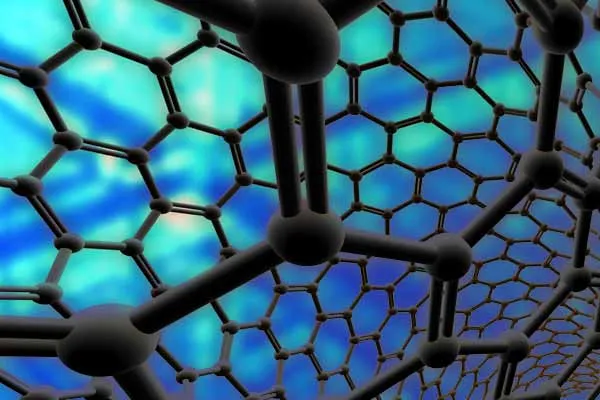
Complex molecules are created thanks to bonds that form between one atom's positively charged protons in its nucleus and another atom's negatively charged electrons. Atoms "share" electrons, and the protons' mutual attraction to the electrons and vice versa overcomes like-charge repulsions.
Life would be: Nonexistent, or with radically altered chemistries.
Mess with the fundamental values of electromagnetism , described above, and chemistry as we know it goes out the window. "The proton and electron balance each other perfectly — change that a little, and you have a very different universe," Jon Friedrich, a professor of chemistry at Fordham University, told Life's Little Mysteries.
Suppose the attraction between protons and electrons were greater, for example, such that the two particles, if freely existing, would combine. One would get nothing more than neutral neutrons, which have a mass that's a bit greater than that of a mashed-together proton and neutron, after the Big Bang.
Neutrons, being an uncharged particle, wouldn't lend themselves to any interesting chemistry (although in our universe, free-floating neutrons decay into a proton and an electron, plus another subatomic particle). Make the proton-electron attraction weaker and intricate chemical bonds between atoms would not occur, which means no giant biomolecules such as DNA.
Previously: What would life be like if the sun were half its size ?
Next: What would be different if our solar system formed elsewhere in the universe?
- 'Magnetic Boy' Just a Very Sticky Kid
- VIDEO GALLERY: 6 Everyday Things that Happen Strangely in Space
- How Did the Solar System Form?
Head to Newsarama.com for complete Flashpoint coverage.

