














What's the Fate of Earth?

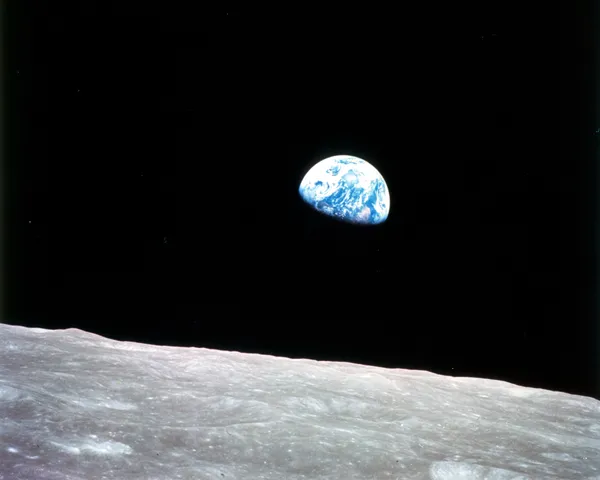
Even if we survive the looming 90-year drought and the unknown ultimate consequences of climate change, and even if anti-aging research pans out and you can hang in there a couple more billion years, eventually we're all toast.
You see, the sun will swell into a red giant phase that by most accounts will engulf Earth. The planet vaporizes.
There's one possible natural out, a small chance — about 1-in-100,000 — that during all this swelling the sun will lose enough mass so that it loses it's gravitational grip on our planet. Then we'll be lost in space, a sunless planet wandering aimlessly in a colder, darker and eventually perpetual night. So we'd all freeze.
There are a couple bright ideas for how to keep the human species going, assuming anyone is around in the future to execute the schemes. We could simply move to Mars or beyond, once we develop the right technology. Or we could, in theory, grab an asteroid somewhere and use its gravity to gradually lift us into an ever-larger orbit around the sun so we stay just beyond the fringe of the frying pan.
Oh, and the Moon? Consider it ancient history in the distant future. Calculations suggest it will disintegrate before we vaporize.
Follow Life's Little Mysteries on Twitter @llmysteries. We're also on Facebook & Google+.
Get the world’s most fascinating discoveries delivered straight to your inbox.

Robert is an independent health and science journalist and writer based in Phoenix, Arizona. He is a former editor-in-chief of Live Science with over 20 years of experience as a reporter and editor. He has worked on websites such as Space.com and Tom's Guide, and is a contributor on Medium, covering how we age and how to optimize the mind and body through time. He has a journalism degree from Humboldt State University in California.