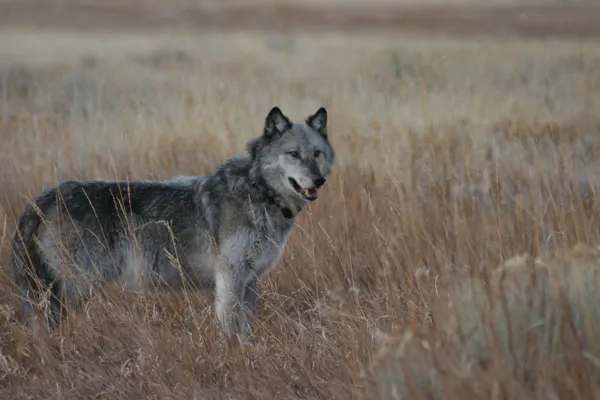
A plan to protect aspen trees in Yellowstone National Park by reintroducing wolves to scare away elk that dined on the trees has hit a snag, a new study finds.
Apparently nobody told the elk, which still seem to be engaging in their daily aspen eating despite predation by the wolves.
"This study not only confirms that elk are responsible for the decline of aspen in Yellowstone beginning in the 1890s, but also that none of the aspen groves studied after wolf restoration appear to be regenerating, even in areas risky to elk," said Matthew Kauffman, a U.S Geological Survey scientist who worked on the study.
Elk congregate on the Camp Creek Feed Ground in northwestern Wyoming.
(Image credit: USGS)
For Yellowstone's aspens to recover, Kauffman and his colleagues say that elk populations need to continue to decline their population is down 40 percent since the wolves were reintroduced.
"A landscape-level aspen recovery is likely only to occur if wolves, in combination with other predators and climate factors, further reduce the elk population," Kauffman said.
For their study, which is detailed this week in the journal Ecology, Kauffman and his team analyzed tree rings to determine when aspen stands stopped regenerating in the past century and whether or not any had started to regenerate again once the wolves came back in 1995. They also experimentally fenced in young aspen to compare the protection afforded to them by wolves versus that of a physical barrier that prevented elk browsing. The fenced-in aspen were the only trees in the sample that survived into adulthood.
Sign up for the Live Science daily newsletter now
Get the world’s most fascinating discoveries delivered straight to your inbox.
Many aspen groves in Yellowstone National Park are failing to regenerate.
(Image credit: USGS)
"This work is consistent with much of what researchers have learned from studying wolves and elk in Yellowstone," Kauffman said. "Elk certainly respond behaviorally to the predation risk posed by wolves, but those small alterations to feeding and moving across the landscape don't seem to add up to long-term benefits for aspen growing in areas risky to elk."