













Cats Take on Owners' Habits (Good and Bad)
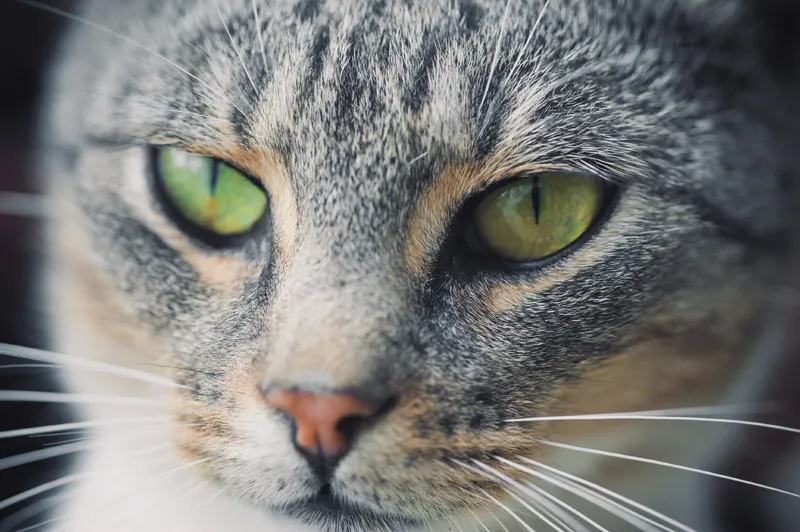
Cats really do become part of our families, to the point that they take on human habits -- good and bad -- and adapt their lifestyle with that of their owners, says new research.
The finding shows how profoundly captivity can affect certain animals. While genetics help to explain some aspects of personality and behavior, an individual's environment clearly is a factor too.
"Our findings underline the high influence of human presence and care on the amount of activity and daily rhythm in cats," concluded Giuseppe Piccione and colleagues of the University of Messina's Faculty of Veterinary Medicine.
Dogs and Cats Help Prevent Infections in Kids
For the Journal of Veterinary Behavior study, the researchers studied two groups of cats. Each group received excellent care, in terms of food, medical attention and grooming. The owners of all the cats worked during the day and returned home in the evenings.
The first group of cats, however, lived in smaller homes and stayed closer to their owners. The second group lived more of an indoor/outdoor lifestyle on larger property. These cats were also kept outside at night.
Over time, the cats in the first group mirrored the lives of their owners. Their eating, activity and sleeping patterns were very similar. The cats left out at night became more nocturnal, matching the behaviors of semi-dependent farm cats with more feral ways.
Get the world’s most fascinating discoveries delivered straight to your inbox.
"Cats are intelligent animals with a long memory," Jane Brunt, DVM, and the executive director of the CATalyst Council, told Discovery News. "They watch and learn from us, (noting) the patterns of our actions, as evidenced by knowing where their food is kept and what time to expect to be fed, how to open the cupboard door that's been improperly closed and where their feeding and toileting areas are."
Piccione pointed out that cats' food intake is associated with that of owners, perhaps explaining why human and cat obesity rates seem to so often match. Cats may even match their elimination patterns with those of their owners.
"It's always interesting when I hear about people who have the litterbox in their bathroom and the cat uses it when the owner is on the toilet," Brunt, a past president of the American Association of Feline Practitioners, said.
Another recent study, published in Applied Animal Behavior Science, looked at personality in cats. Many of the primary traits -- arrogant, social, shy, trusting, aggressive, calm, timid, excitable, dominant and curious -- apply to humans as well.
Authors Marieke Cassia Gartner and Alexander Weiss of The University of Edinburgh believe that the environment in which a feline lives "is one possible explanation for the variance in results in the domestic cat, as personality may not be completely comprised of genetic makeup."
Humans even serve as role models for their cats.
"While it's commonly thought that cats are solitary and aloof and can take care of themselves, studies have shown that cats are social animals and when people are their main social group, it's important for owners to understand that they are the role model and we have to encourage their activities with proper play/prey techniques," Brunt explained, adding that when owners take time to play with their cats, the felines are more motivated to stay active.
While it's now known that owners greatly influence their cats, the reverse is true as well. Cats can influence that habits and lifestyle of their owners. Brunt said that we often adjust our schedules to fit theirs, such as getting up earlier and responding to their needs.
"I also think we can learn a lot from cats," she added. "When they sit on our lap softly purring with rhythmic breathing and half-closed eyes, the sense of serenity and calm that comes over us is like a private lesson in inner peace and meditation."
This story was provided by Discovery News.