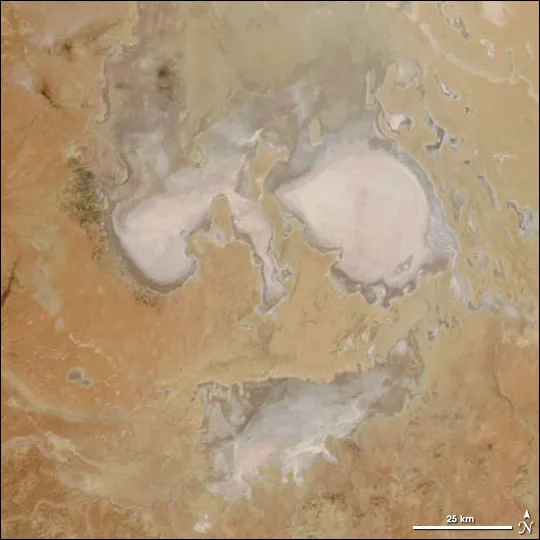
Boo! Ghostly 'Face' Looks Up from Desert
Get the world’s most fascinating discoveries delivered straight to your inbox.
You are now subscribed
Your newsletter sign-up was successful
Want to add more newsletters?
Delivered Daily
Daily Newsletter
Sign up for the latest discoveries, groundbreaking research and fascinating breakthroughs that impact you and the wider world direct to your inbox.
Once a week
Life's Little Mysteries
Feed your curiosity with an exclusive mystery every week, solved with science and delivered direct to your inbox before it's seen anywhere else.
Once a week
How It Works
Sign up to our free science & technology newsletter for your weekly fix of fascinating articles, quick quizzes, amazing images, and more
Delivered daily
Space.com Newsletter
Breaking space news, the latest updates on rocket launches, skywatching events and more!
Once a month
Watch This Space
Sign up to our monthly entertainment newsletter to keep up with all our coverage of the latest sci-fi and space movies, tv shows, games and books.
Once a week
Night Sky This Week
Discover this week's must-see night sky events, moon phases, and stunning astrophotos. Sign up for our skywatching newsletter and explore the universe with us!
Join the club
Get full access to premium articles, exclusive features and a growing list of member rewards.
In this NASA satellite image, the shape of a ghostly face appears to be peering up from South Australia's Tirari Desert.
The pale, skeletal-like features are produced by salt deposits in the basin of Lake Eyre, a usually dry salt lake in the lowlands of central South Australia. The lake is the lowest point in Australia, sitting about 56 feet (17 meters) below sea level.
When rains fall, temporary rivers and streams -- collectively called Channel Country -- flow through surrounding deserts into the interior lowland region , carrying in salty, marine sediments that were laid down in the region in the distant past.
Lake Eyre is filled by the streams only rarely; it has filled only three times in the 20th century, most recently in 1989.
Usually the lake, like other dry lakes, is a source of dust storms and is probably the largest source of airborne dust in the Southern Hemisphere, according to a NASA statement.
The image of the dry lake was taken by the Moderate Resolution Imaging Spectroradiometer (MODIS) instrument on NASA's Aqua satellite on Oct. 29, 2006.
Get the world’s most fascinating discoveries delivered straight to your inbox.