

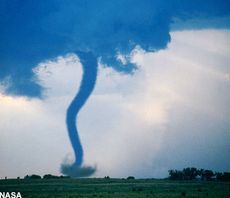
Tornadoes are the most powerful, unpredictable and destructive weather systems on Earth. The National Weather Service (NWS) defines a Tornado as a violently rotating column of air in contact with the earth’s surface (land or water) and commonly associated with a severe thunderstorm.A tornado generally occurs when high winds within a low pressure system (such as a thunderstorm) cause water vapor in the air to condense in to a condensation funnel cloud. Many less severe tornadoes are not even visible to the human eye. Major tornadoes usually become more visible when the strong winds within the funnel lift up dirt and debris off the Earth’s surface. Tornadoes are generally classified as either a land spout (a tornado on land), a water spout (a tornado that forms over water) or a gustnado (a small tornado caused by a strong downburst of wind from a thunderstorm).The average tornado has maximum wind speeds of about 112 mph or less, measures around 250 feet in width and travels approximately one mile before falling apart. Some of the most catastrophic tornadoes in recorded history have had winds in excess of 300 miles an hour (twice that of a category 5 hurricane), have measured more than 2 miles in girth, and have carved devastating paths of destruction miles and miles in length.

-
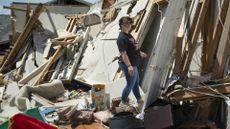 In 2025, Tornado Alley has become almost everything east of the Rockies — and it's been a violent year
Opinion A storm scientist explains what's been driving deadly tornado outbreaks and how tornado season has been changing.
Opinion -
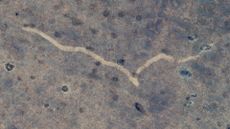 Huge, 7-mile scar torn across Australia's Nullarbor Plain discovered by caver scouring Google Earth
After the caver noticed a giant gash across a barren landscape, scientists discovered it was created by a ferocious tornado that no-one knew had occurred.
-
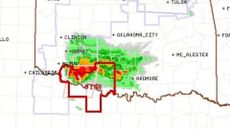 'You certainly don't see this every day': Ultra-rare backward-spinning tornado formed over Oklahoma
A pair of odd twisters spun out from a supercell thunderstorm in Oklahoma Tuesday (April 30).
-
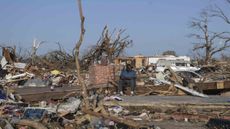 'Wedge tornado' in Mississippi is the deadliest in more than 50 years
A devastating, nearly mile-wide "wedge tornado" has killed at least 26 people and battered Mississippi with golf ball-size hail and winds up to 200 mph.
-
 Scientist Reading the Leaves to Predict Violent Weather
Moisture emitted by a single leaf provides clues to imminent thunderstorms and tornadoes.
-
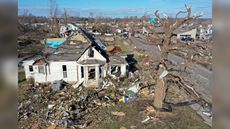 How the 'deadly December tornado' carved a 250-mile path through 4 states
The death toll in Kentucky could exceed 70 from the record-breaking tornado.
-
 How a tornado outbreak left 22 dead across central Tennessee
Twenty-two are dead, more are missing, and many more are injured after a supercell storm spawned a series of tornadoes early Tuesday morning, including one that struck downtown Nashville.
-
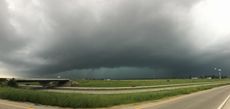 Powerful Tornadoes Rip Through Midwest, the Plains, Leaving Trail of Destruction
A destructive tornado moved through the outskirts of Kansas City on Tuesday, injuring at least a dozen people and killing one.
-
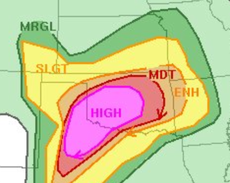 Violent Tornadoes and Flooding Are Expected in Oklahoma and Texas Tonight
Oklahoma, northwest Texas and the Texas panhandle are bracing for a day of extreme weather, including dangerous tornadoes, flooding and thunderstorms.


