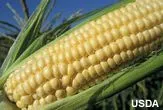
The United States produces more than 300 million tons of corn a year - nearly half the world production - according to the U.S. Department of Agriculture. That's about 2,000 pounds of corn for every U.S. citizen.
Most folks don't eat that much. So some of the maize gets turned into other things - from corn syrup used in baking to ethanol employed as an alternative fuel.
Soon, computers and other electronics could be shipped in packaging lined with corn-based products.
Latest Videos From
"Corn is the most common commercial starch and the one with the largest surplus," said George Fanta from the USDA's Agriculture Research Services (ARS).
One of the missions of the ARS is to come up with new uses for this surplus. Fanta and his colleague, Fred Felker, are exploring ways to make better plastics with cornstarch. Besides being cheap, cornstarch is biodegradable.
"Cornstarch itself has absolutely no toxicity," Fanta explained in a telephone interview.
It also is water-soluble. Some plastics made partly of cornstarch are currently being mixed into soils to help them retain more water.
In a related vein, Fanta and Felker have recently developed cornstarch coatings, which make plastic sheets hydrophilic (water-loving) - allowing a wide variety of water-based inks to be used on things like plastic bags.
To make the coatings, the scientists dip a plastic sheet in a solution of cooked cornstarch. When the sheet is removed and let dry, microscopic nodules of starch adhere to the sheets.
The water-compatibility of the coatings reduces the buildup of static charge on the sheets. Fanta explained that excess charge will "bleed off" a hydrophilic surface because water carries electricity. This has special relevance for packaging used in the electronics industry.
"If you use the wrong kind of wrapping, you can have a discharge," Fanta said. "It can actually damage sensitive electronic components."
There currently are ways to make plastic sheets hydrophilic by using harsh chemical agents. If the researchers' technique can be expanded, it could provide a safer and easier alternative.

 Live Science Plus