
 Live Science Plus


Couples Prefer Embryo Donation vs. Destruction
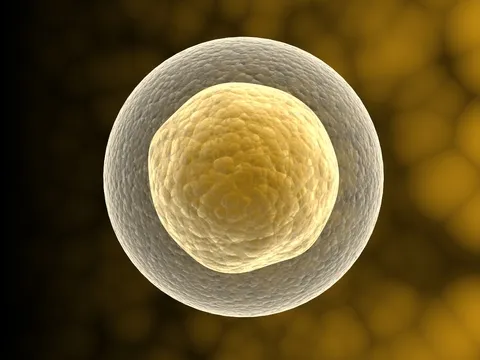
Couples who have undergone fertility treatment would rather donate their unused embryos to stem-cell medical research than have them destroyed or passed on to other infertile couples, a new survey finds.
The results, detailed today in the online version of the journal Science, suggest federal policies limiting funds to research involving stem cells derived from embryos attained before August 2001 might not reflect the preferences of infertility patients.
Stem cells have the ability to develop into any type of cell in the human body and could be the silver bullet for treating a slew of diseases, from autoimmune disorders to cancer. However, embryonic stem-cell research has been stymied by both moral and political debate.

People who undergo fertility treatment can end up with up to 20 unused embryos. What to do with the leftover embryos is a weighty decision for some, and it has been unknown up to now if there was a tendency among Americans toward one option or another, say the scientists.
“For these people, research may prove to be the most acceptable and morally preferable option,” said lead study author Anne Drapkin Lyerly of Duke University Medical Center.
Lyerly and colleague Ruth Faden of Johns Hopkins Berman Institute of Bioethics surveyed more than 1,000 patients, who currently have frozen embryos stored, from nine infertility centers across the United States. Most of the respondents were married and 31 years or older.
They represented a range of religious affiliations:
Get the world’s most fascinating discoveries delivered straight to your inbox.
- Protestant: nearly 30 percent
- Roman Catholic: about 25 percent
- “Other” Christian: 10 percent
- Fundamentalist: 10 percent
- None: 17 percent
- The remaining respondents reported their religion as Muslim, Jewish or “Other”
Nearly half of the respondents opted to donate their embryos for general research. They were even more willing (60 percent) to donate their embryos to research focused on creating stem cells as well as research to develop treatments for diseases. Nearly 30 percent of the respondents said they were willing to donate embryos for cloning science.
Some 400,000 embryos are stored in the United States in various facilities, and most of these are slated for the patient’s own treatment, with 11,000 remaining as potentials for research, according to a 2003 survey.
The new study estimates nearly 10 times more (100,000 embryos) embryos available for research than the past estimate, a difference the scientists say can be explained by the fact that the 2003 study queried fertility clinics rather than individuals.
The study was funded by the National Institutes of Health (NIH) and the Greenwall Foundation, an independent foundation that supports bioethics, and arts and humanities work.
- Top 10 Mysterious Diseases
- What is a Stem Cell?
- Bush Vetoes Stem Cell Bill
Jeanna Bryner is managing editor of Scientific American. Previously she was editor in chief of Live Science and, prior to that, an editor at Scholastic's Science World magazine. Bryner has an English degree from Salisbury University, a master's degree in biogeochemistry and environmental sciences from the University of Maryland and a graduate science journalism degree from New York University. She has worked as a biologist in Florida, where she monitored wetlands and did field surveys for endangered species, including the gorgeous Florida Scrub Jay. She also received an ocean sciences journalism fellowship from the Woods Hole Oceanographic Institution. She is a firm believer that science is for everyone and that just about everything can be viewed through the lens of science.