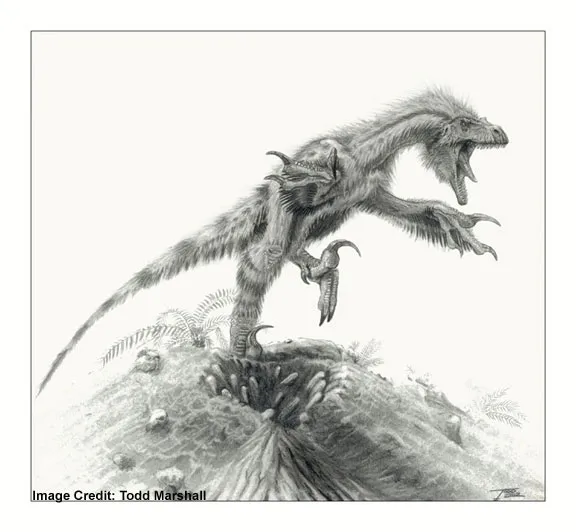
The distinction between birds and the dinosaurs from which they evolved is getting even murkier. The genomes (complete DNA sequences) of both groups are short, researchers now say.
Scientists used to think that relatively shorter genomes were associated with flight. Birds have short genomes compared to other vertebrates, or animals with backbones--the average bird genome length is a measly 1.45 billion base pairs. Bats also have short genomes--about 2.25 billion base pairs. Humans genomes are another billion base pairs longer. Also, flightless birds tend to have longer genomes than flying birds.
But the new finding by Chris Organ of Harvard University and his colleagues complicates this thinking and shows that the shorter genomes of birds originated in saurischian dinosaurs, the group of dinosaurs from which birds evolved and that includes Tyrannosaurus rex. So rather than being a characteristic of birds or flying animals, short genomes should be thought of as a characteristic of dinosaurs, including the killer theropod dinosaurs, he said.
Latest Videos From
"Birds just inherit that character like they have inherited other dinosaurian traits, like feathers," Organ told LiveScience.
Scientists once thought that feathers, nesting and parental care also were features just of birds, but all three of these characteristics have now also been identified in non-avian dinosaurs.
Most genome-length studies have focused only on living animals, which make up only about 1 percent of all animal species that have ever existed on Earth. Organ and his colleagues brought in a comparison with 31 extinct dinosaur species by relying on a well-known relationship between cell size and genome size. Bigger cell sizes are correlated with longer genomes.
The team was able to generate estimates of the genome lengths of the dinosaurs by measuring the corresponding bone-cell sizes [image] seen in slides [image], from the collection of Harvard University's Alfred Crompton and the Museum of the Rockies in Montana.
They compared these data with genome size estimates for 26 additional living four-limbed animals also made from cell-size observations. Then they generated a family tree that showed how genome length evolved over time. The results showed that the shorter, "bird-sized" genomes (of about 1.8 billion base pairs) evolved in saurischian dinosaurs between 230 and 250 million years ago, long before Archaeopteryx and the other early birds evolved.
The other major group of dinosaurs, ornithischian dinosaurs, which includes the frilled ceratopsian dinosaurs, had longer genomes more typical of crocodiles and alligators (around 2.5 or 3 billion base pairs).
The results are detailed in the March 8 issue of the journal Nature.

 Live Science Plus