
 Live Science Plus


Great Barrier Reef: Facts, Location & Animals
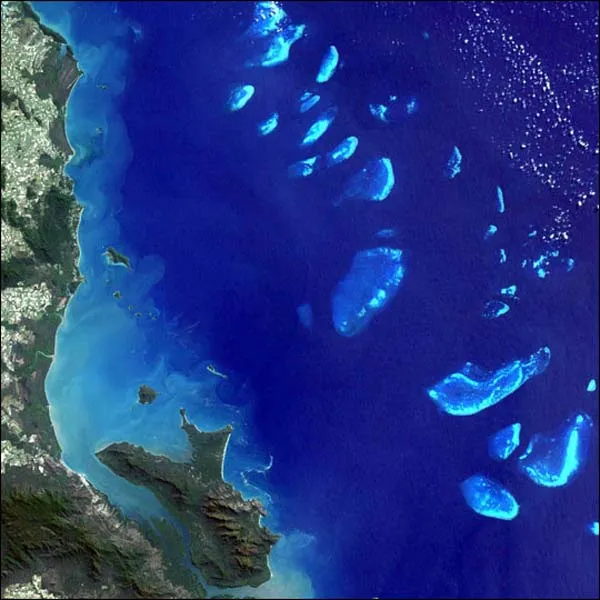
The Great Barrier Reef is a mosaic of 2,900 individual reefs off the coast of Queensland in northeast Australia. The sprawling reef can be seen from space and is not only the world's largest coral reef system but also the largest structure on Earth made by living organisms.
Where is the Great Barrier Reef?
The Great Barrier Reef stretches more than 1,600 miles (2,575 kilometers) — a little more than the distance from Boston to Miami. It covers an area of 133,000 square miles (344,400 square km), reaching from the Torres Strait at it northernmost point to Fraser Island in the south. The reef includes Lady Elliot Island and the smaller Murray islands.

Great Barrier Reef animals
A coral reef consists of coral polyps, which are animals in the jellyfish family, along with algae called zooxanthellae. In return for a cozy, safe place to live, the algae provide the building blocks polyps need to survive and make limestone to build the reef structures. The vast structures that result do more than awe snorkelers. [Images: Colorful Corals of the Great Barrier Reef]
The Great Barrier Reef supports a vast array of life forms. Thirty species of whales, dolphins and porpoises have been recorded in the Great Barrier Reef, including the dwarf minke whale, Indo-Pacific humpback dolphin, and the humpback whale.
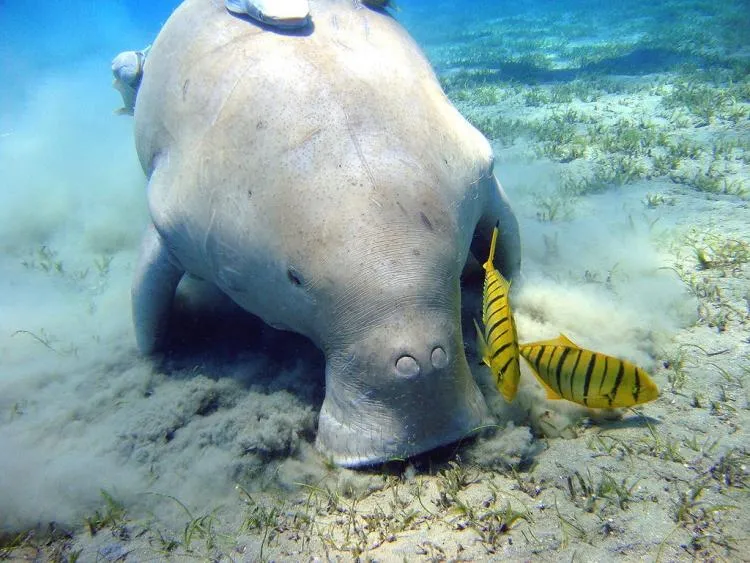
Large populations of dugongs, large marine mammals that are relatives of the manatees, make their home along the reef.
Get the world’s most fascinating discoveries delivered straight to your inbox.
More than 1,500 fish species live on the reef, including the clownfish, red bass, red-throat emperor, and several species of snapper and coral trout. About 5,000 species of mollusks live on the reef.
Seventeen species of sea snake live on the Great Barrier Reef in warm waters up to 160 feet (49 meters) deep and are more common in the south than in the northern section.
Six species of sea turtles — the green sea turtle, leatherback sea turtle, hawksbill turtle, loggerhead sea turtle, flatback turtle, and the olive ridley — come to the reef to breed.
Saltwater crocodiles live in mangrove and salt marshes on the coast near the reef.
The Great Barrier Reef is home to 215 species of birds (including 22 species of seabirds and 32 species of shorebirds) that visit the reef or nest or roost on the islands. The white-bellied sea eagle and roseate tern are frequently sighted.
The 15 species of seagrass found along the reef attract the dugongs and turtles and provide habitats for the fish. The most common types of seagrasses are Halophila and Halodule.
The reefs are vital to the survival of several endangered species, so much so that in 2004, the Great Barrier Reef Marine Park Authority (GBRMPA) increased the amount of highly protected zones by almost 30 percent.
How the reef formed
The Great Barrier Reef is about 500,000 years old, but it hasn't always looked as it does today. Reefs on Australia's continental shelf have taken on many forms, depending on the sea level, and the current formation is about 6,000 to 8,000 years old.
According to the Australian Institute of Marine Science and other scientific research, the current reef began to form during the Last Glacial Maximum. This period, which occurred from about 26,500 years ago to 19,000 to 20,000 years ago, ushered in significant environmental changes in the region, including a dramatic drop in sea levels.
The land that forms the base of the Great Barrier Reef is the remains of the sediments of the Great Dividing Range, Australia's largest mountain range. About 13,000 years ago, the sea level was 200 feet (61 meters) lower than the current level, and corals began to grow around the hills of the coastal plain, which had become continental islands. The sea level continued to rise during a warming period as glaciers melted. Most of the continental islands were submerged, and the coral remained to form the reefs and cays (low-elevation sandy islands) of today.
Variety of reefs
The Great Barrier Reef World Heritage Area is divided into 30 bioregions that consist of different types of reefs.
Cresentic reefs — shaped like crescents as the name implies — are the most common shape of reef in the middle of the system. These types of reefs are found surrounding Lizard Island as well as far north of the Great Barrier Reef Marine Park and in the Swain Reefs.
Flat reefs known as planar reefs are found in the northern and southern parts, near Cape York Peninsula, Princess Charlotte Bay and Cairns.
The northern part of the Great Barrier Reef features ribbon reefs, which are narrow and winding, and deltaic reefs, which, as the name implies, resemble river deltas.
Fringing reefs, which attach to the mainland, are infrequent. Most occur in the southern part of the Great Barrier Reef and are attached to high islands such as the Whitsunday Islands.
Lagoonal reefs are found in the southern Great Barrier Reef, and further north, off the coast of Princess Charlotte Bay. [Image Gallery: Great Barrier Reef Through Time]
Environmental concerns
A tourism hotspot, approximately 2 million people visit the Great Barrier Reef every year, according to the Australian government. There is widespread concern that such intense tourism might be harming the fragile reefs.
Pollution is another concern, as another oil spill occurred in 2010, when the Chinese coal-carrying ship Shen Neng1 ran aground on the reef, leaking a 1.86-mile-long (3 km) ribbon of oil and destroying precious coral and marine life.
Declining water quality is a major factor in the pollution of the Great Barrier Reef. During tropical floods, runoff containing fertilizer and pesticides is dispensed into the reef's waters and harms its delicately balanced ecosystem. The runoff problem is made worse by the loss of coastal wetlands along the Queensland coast, which act as a natural filter for toxins. The area of wetlands in the Great Barrier Reef catchment has decreased by over 50 percent, according to the Great Barrier Reef Coastal Wetlands Protection Program.
— Kim Ann Zimmermann, LiveScience Contributor
Kim Ann Zimmermann is a contributor to Live Science and sister site Space.com, writing mainly evergreen reference articles that provide background on myriad scientific topics, from astronauts to climate, and from culture to medicine. Her work can also be found in Business News Daily and KM World. She holds a bachelor’s degree in communications from Glassboro State College (now known as Rowan University) in New Jersey.