
 Live Science Plus


The Most Interesting Science News Articles of the Week

Each week we uncover the most interesting and informative articles from around the world, here are some of the coolest stories in science this week.
The Voice Recovered?

The remains of the RMS Titanic are rapidly corroding at the bottom of the North Atlantic. But a proposal to cut the ship’s telegraph machine from the wreck has drawn fierce criticism.
A wireless telegraph machine, sometimes called the "voice of the Titanic" for its role in sending out distress messages on the fateful night in 1912 when the RMS Titanic cruise liner hit an iceberg, could be recovered from the shipwreck lying at the bottom of the North Atlantic. [Read more about the situation.]
Water, Water Everywhere

Chemicals in ancient ocean rocks hint that 3.2 billion years ago, the surface of a baby Earth was continent-free and covered by a global ocean. [Read more about the world.]

Comparing Worries

The coronavirus particle as a crown of spikes on its surface.
How does the new coronavirus compare with the seasonal flu, and which should you most worry about? [Read more about the illnesses.]
Beast Rebirthed

MOLA archaeologists excavate the top of the cesspit, which had been backfilled and covered over with several layers of brick flooring.
The treasures include a gold-plated ring and a rare medieval tile depicting a mythical creature. [Read more about the monster.]
Ancient Social Networking?

Rangeomorphs dominated the seafloor for millions of years, despite having no mouths, guts or way to move around. Part of their success may have been owed to a "social network" of string-like filaments connecting individual members, a new study suggests.
Rangeomorphs had no mouths, guts, arms, legs or reproductive organs, but an ancient "network" of strings may have helped them dominate the ocean floor anyway. [Read more about the connections.]
Powerful Female Figure
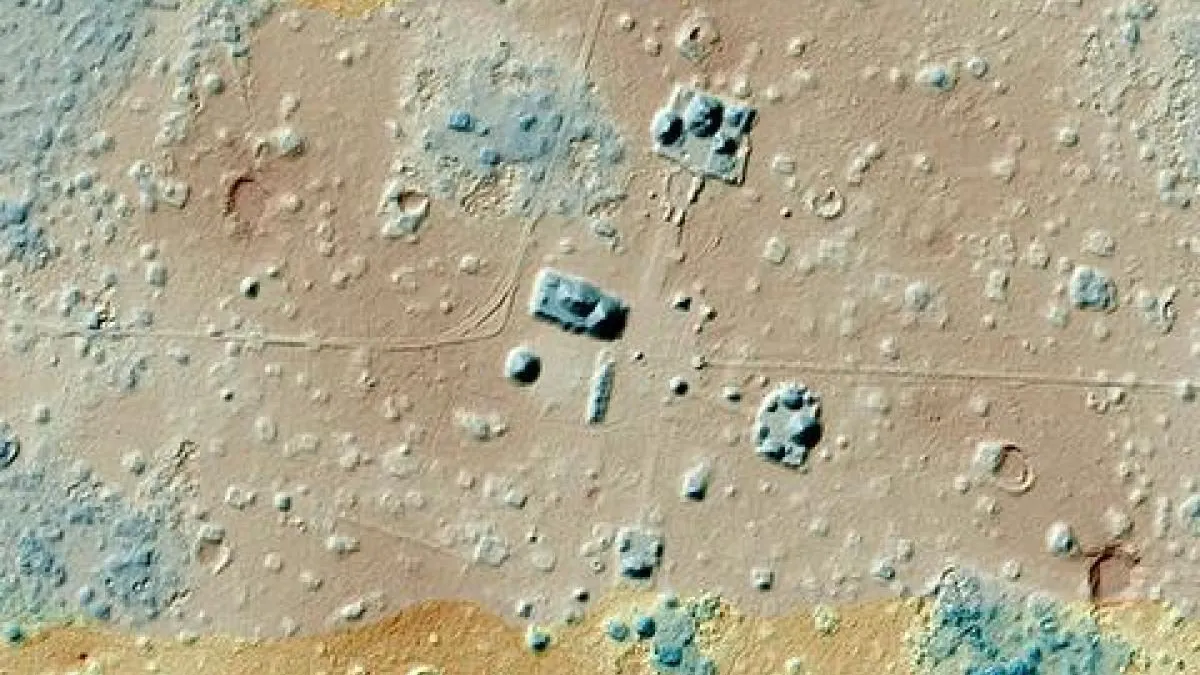
Archaeologists have surveyed the Mayan road with airborne LIDAR technology to reveal the ancient structures along its length.
A ruthless Maya warrior queen may have ordered the building of an elaborate road more than 1,000 years ago to invade a distant city and to counter the rising power of another. [Read more about the leader.]
Get the world’s most fascinating discoveries delivered straight to your inbox.
Unique Attack

Illustration of Streptococcus pneumoniae
Scientists aim to stay the spread of antibiotic resistance by messing with how bacteria evolve. [Read more about the theory.]
DIY Sanitizer

When soap and water aren't available, hand sanitizer can help protect against disease-causing microbes like the novel coronavirus.
High alcohol content ensures that DIY hand sanitizers will effectively reduce coronavirus when soap and water aren't available. [Read more about the plan.]
Effects of a Lockdown

A map shows the sharp decline in emissions over China between early January and late February.
There's been a sharp drop in air pollution over China since the acceleration of the COVID-19 coronavirus outbreak, and satellites can see it from space. [Read more about the change.]
"Erie" Winter Wonderland

Ice formed on a house during a storm in Hamburg, New York, on Feb. 28.
Powerful winds and freezing temperatures recently made a chilling spectacle of several homes near Lake Erie, encasing them in thick layers of ice. [Read more about the scene.]
Follow Live Science @livescience, Facebook & Google+.
