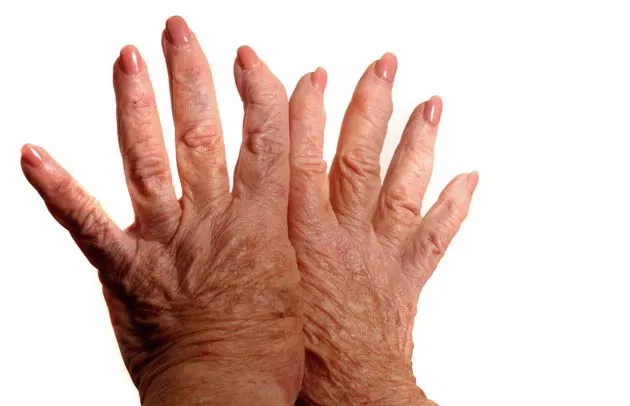
This Week's Question: I'm pretty sure I have arthritis in my knee. Is there any danger this will spread? First, anyone who thinks they may have arthritis should see a doctor. Self-diagnosis is hazardous to your health. Now for some information about arthritis all geezers should know. Arthritis, which comes in different forms, is inflammation of the joints. Osteoarthritis, rheumatoid arthritis and gout are the three most common forms of arthritis among seniors. Osteoarthritis is the most prevalent. None is contagious. Osteoarthritis You get osteoarthritis when cartilage — the cushioning tissue within the joints — wears down. This produces stiffness and pain. The disease affects both men and women. By age 65, more than 50 percent of us have osteoarthritis in at least one joint. You can get osteoarthritis in any joint, but it usually strikes those that support weight. Common signs of osteoarthritis include joint pain, swelling, and tenderness. However, only a third of people whose x-rays show osteoarthritis report any symptoms. Treatments for osteoarthritis include exercise, joint care, dieting, medicines and surgery. For pain relief, doctors usually start with acetaminophen, the medicine in Tylenol, because the side effects are minimal. If acetaminophen does not relieve pain, then non-steroidal anti-inflammatory drugs such as ibuprofen and naproxen may be used. The dietary supplements glucosamine and chondroitin sulfate are used by many who say the supplements can relieve the symptoms of osteoarthritis. Rheumatoid arthritis Rheumatoid arthritis, which is characterized by inflammation of the joint lining, is very different from osteoarthritis. It occurs when the immune system turns against the body. It not only affects the joints, but may also attack other parts of the body such as the lungs and eyes. People with rheumatoid arthritis may feel sick. There's a symmetry to rheumatoid arthritis. For example, if the right knee is affected, it's likely the left knee will suffer, too. Women are much more likely than men to get rheumatoid arthritis. Treatments for rheumatoid arthritis include exercise, medication and surgery. Reducing stress is important. Some drugs for rheumatoid arthritis relieve pain. Some reduce inflammation. And then there are the DMARDs (disease-modifying anti-rheumatic drugs), which can often slow the disease. Gout Gout usually attacks at night. Stress, alcohol, drugs or an illness can trigger gout. It's caused by a build-up of crystals of uric acid in a joint. Uric acid is in all human tissue and is found in foods. Often, gout affects joints in the lower part of the body such as the ankles, heels, knees, and especially the big toes. The disease is more common in men. Early attacks usually subside within 3 to 10 days, even without treatment, and the next attack may not occur for months or even years. Most people with gout are able to control their symptoms with treatment. The most common treatments are high doses of oral non-steroidal anti-inflammatory drugs, or corticosteroids, which are taken by mouth or injected into the affected joint. Patients often begin to improve within a few hours of treatment.
The Healthy Geezer column publishes each Wednesday on LiveScience. If you would like to ask a question, please write fred@healthygeezer.com. © 2009 by Fred Cicetti.
